Planning a safari in Tanzania’s Serengeti National Park is exciting, but preparing for the trip involves more than booking accommodation and packing binoculars. Understanding health risks, recommended vaccinations, and malaria prevention is an important part of making your safari safe and enjoyable.
The Serengeti is a remote wilderness destination, where advanced medical facilities may be several hours away. Although most travelers enjoy their safaris without serious health problems, taking the right precautions before departure can make a significant difference.
So, what vaccines do you need for a Serengeti safari? Is malaria a risk? And should you take malaria prevention medication?
The Serengeti is located in a malaria-risk region, and preventive medication is generally recommended for travelers visiting affected areas. Vaccinations such as hepatitis A and typhoid are also commonly recommended, while yellow fever vaccination requirements depend on your travel route.
Health preparation is an important part of planning a Serengeti safari, but travel dates, accommodation choices, and transportation arrangements also influence your experience. For a broader overview of the destination, explore our complete Serengeti National Park safari guide, which explains the park’s different regions, wildlife highlights, and practical planning considerations.
This Serengeti safari health guide explains the main medical preparations, vaccination recommendations, malaria precautions, and practical steps to take before traveling to Tanzania.
Serengeti safari health requirements: Quick overview
Health recommendations depend on your age, medical history, vaccination status, and travel itinerary.
Here’s a summary of the main considerations.
| Health consideration | What travelers should know |
|---|---|
| Yellow fever | Certificate required for certain arrival routes through yellow fever risk countries |
| Hepatitis A | Recommended for unvaccinated travelers |
| Hepatitis B | Recommended for many unvaccinated travelers |
| Typhoid | Recommended for most travelers |
| Routine vaccinations | Should be up to date |
| Malaria | Risk exists in Serengeti safari areas; prescription prevention is generally recommended |
| Rabies | Pre-exposure vaccination may be appropriate for some travelers |
| Medical insurance | Emergency evacuation coverage is strongly recommended |
These recommendations are based on public-health guidance and don’t replace individualized medical advice.
Ideally, arrange a travel-health consultation at least four to six weeks before departure.
What vaccines do you need for a Serengeti safari?
Tanzania doesn’t require every visitor to receive the same vaccinations.
Some vaccines are recommended for personal protection, while others may be required for entry depending on where you’re traveling from.
Routine vaccinations
Before visiting the Serengeti, make sure your routine vaccinations are current.
These typically include measles, mumps and rubella (MMR), tetanus, diphtheria, pertussis, and polio, as appropriate for your age and vaccination history.
Seasonal influenza and COVID-19 vaccinations should also be reviewed according to current medical recommendations.
International travel can increase exposure to infectious diseases, particularly during airport transfers and time spent in crowded public spaces.
Hepatitis A and hepatitis B
Hepatitis A vaccination is recommended for unvaccinated travelers visiting Tanzania.
The virus spreads primarily through contaminated food and water, making vaccination an important preventive measure.
Hepatitis B spreads through infected blood and certain bodily fluids.
Vaccination is recommended for many unvaccinated travelers, with particular importance for those who may need medical treatment abroad or have other exposure risks.
Typhoid vaccination
Typhoid fever is another food- and waterborne illness.
Vaccination is recommended for most travelers visiting Tanzania, although it doesn’t eliminate the need for careful food and water hygiene.
Travelers should still drink safe water, wash their hands regularly, and follow sensible food precautions.
Rabies vaccination
Rabies pre-exposure vaccination isn’t necessary for every safari visitor.
However, it may be worth discussing if you’re planning extended stays, working with animals, or visiting remote locations where prompt medical treatment could be difficult.
Even vaccinated travelers need urgent medical assessment after a possible rabies exposure.
Never approach or touch unfamiliar animals, including dogs, monkeys, and other mammals.
Is yellow fever vaccination required for the Serengeti?
Yellow fever is one of the most confusing vaccination topics for Tanzania travelers.
The important distinction is between a vaccine recommended for health protection and a vaccination certificate required for entry.
Yellow fever vaccination is generally not recommended solely for travel to Tanzania, but proof of vaccination may be required depending on your arrival route.
Tanzania requires a yellow fever vaccination certificate from travelers aged one year or older arriving from countries classified as having yellow fever transmission risk.
The requirement also generally applies when travelers spend more than 12 hours transiting through an airport in a yellow fever risk country.
For example, a traveler arriving from a country without yellow fever risk may not need the certificate, while someone arriving through a designated risk country could need one.
When required, vaccination should normally be administered at least ten days before arrival.
Certain travelers may qualify for medical exemptions, but documentation must meet applicable entry requirements.
Because rules depend on the exact flight itinerary, check the current official requirements before departure, especially if your journey includes several African countries.
Is malaria a risk in the Serengeti?
Yes. Malaria is a genuine health risk in the Serengeti, and travelers should take prevention seriously.
Malaria is transmitted through bites from infected Anopheles mosquitoes.
The US Centers for Disease Control and Prevention identifies malaria transmission risk in Tanzanian areas below approximately 1,800 meters in elevation.
Much of the Serengeti lies within this risk category.
Risk can vary with altitude, rainfall, temperature, and location, but travelers shouldn’t assume that visiting during the dry season eliminates the possibility of infection.
Do you need malaria pills for a Serengeti safari?
For travelers visiting malaria-risk areas, prescription malaria prevention medication is generally recommended.
Common options include:
- Atovaquone-proguanil.
- Doxycycline.
- Mefloquine.
- Tafenoquine, for eligible adults after required testing.
The appropriate medication depends on individual factors, including age, pregnancy status, medical conditions, potential side effects, and other medicines.
Certain options must be started before departure and continued after leaving the malaria-risk area.
Don’t choose or stop malaria medication without guidance from a qualified healthcare professional.
How to prevent mosquito bites
Even when taking preventive medication, mosquito protection remains essential.
Use an effective insect repellent containing ingredients such as DEET or picaridin, following the product instructions.
Wear long-sleeved clothing and trousers during the evening and early morning.
Sleep in appropriately screened accommodation or under a properly maintained mosquito net when needed.
Permethrin-treated clothing may provide additional protection, but permethrin products intended for fabrics should never be applied directly to skin.
No single preventive measure provides complete protection, so combining strategies is important.
Food and drinking water safety on safari
Food and water hygiene is another important part of Serengeti medical preparation.
Established safari lodges generally follow food-handling procedures and provide drinking water, but travelers should confirm which water is safe.
Avoid drinking untreated water from taps, rivers, or natural sources.
Use filtered, treated, or sealed bottled water when appropriate.
Wash your hands before meals and after using the bathroom, or use alcohol-based hand sanitizer when soap and water aren’t available.
If you develop diarrhea, staying hydrated is important. Oral rehydration salts can be particularly useful.
Seek medical advice for severe symptoms, persistent illness, bloody diarrhea, dehydration, or fever.
What medicines should you pack for a Serengeti safari?
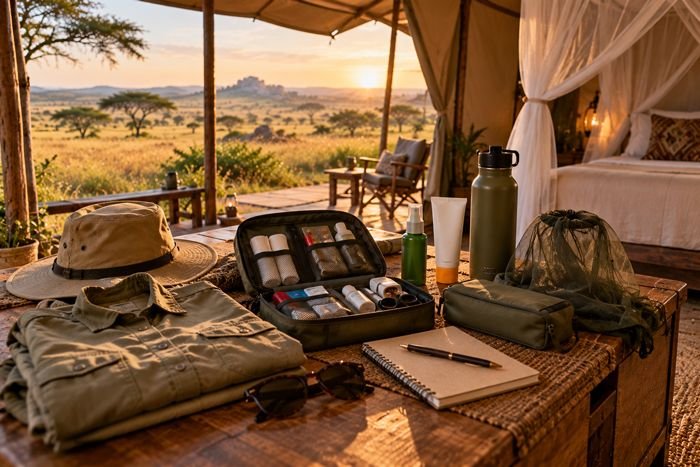
A compact personal medical kit can be extremely valuable in remote safari locations.
Bring sufficient quantities of your regular prescription medications, ideally with extra supplies in case of travel delays.
Useful items may include:
- Prescribed malaria prevention medication.
- Personal prescription medicines in original packaging.
- Oral rehydration salts.
- Basic wound dressings and antiseptic supplies.
- A thermometer.
- Insect repellent and sunscreen.
- Any clinician-recommended treatment for traveler’s diarrhea.
- Prescribed emergency medication for known allergies or medical conditions.
Ask a healthcare professional which medicines are appropriate for your circumstances.
Keep essential medication in your hand luggage rather than checked baggage, particularly if you’re taking domestic safari flights.
Medical facilities and emergency evacuation in the Serengeti
The Serengeti’s remoteness is part of its appeal, but it also means that advanced medical treatment may not be immediately available.
Safari camps may have first-aid supplies and staff trained to respond to emergencies, but they’re not substitutes for hospitals.
Serious injuries or illnesses may require transportation to medical facilities in larger towns or cities.
Before departure, purchase travel insurance that includes emergency medical treatment and evacuation from remote areas.
Ask your safari operator how emergencies are handled and whether it works with a dedicated evacuation provider.
Carry your insurance information, emergency contacts, and essential medical details in both digital and accessible offline formats.
Special medical considerations for families and pregnant travelers
Children, pregnant travelers, older adults, and people with chronic medical conditions may require additional preparation.
Malaria can be particularly serious during pregnancy and in young children.
Some preventive medicines and vaccinations aren’t suitable for certain ages or during pregnancy, making individualized advice essential.
Families should also consider access to medical facilities, travel fatigue, and how their children handle long game drives.
Travelers with chronic conditions should discuss the remote environment, transportation arrangements, and emergency planning with their healthcare provider.
What to do if you feel sick during or after your safari
Don’t ignore a fever during or after travel to a malaria-risk area.
Malaria can become serious quickly, and symptoms may appear after you’ve returned home.
Fever, chills, headaches, muscle aches, or unusual fatigue require prompt medical assessment.
Tell the healthcare professional that you’ve recently traveled to Tanzania, even if you took malaria prevention medication.
If you become unwell while in the Serengeti, notify your guide or camp manager immediately so they can help arrange medical assistance.
Avoid attempting to diagnose or treat a suspected malaria infection yourself.
When should you start your safari health preparations?
Ideally, begin medical preparations four to six weeks before departure, or earlier if you have a complex medical history.
This allows time to review vaccinations, obtain prescriptions, discuss malaria prevention, and arrange insurance.
If your departure is sooner, a travel-health consultation is still worthwhile.
Also review your complete itinerary, including connecting countries, Zanzibar extensions, and any additional national parks.
Health and entry requirements can differ depending on these arrangements.
Final thoughts: Preparing for a healthy Serengeti safari
A Serengeti safari is an extraordinary adventure, and sensible medical preparation helps you enjoy it with greater confidence.
The most important steps are checking your vaccinations, understanding yellow fever entry requirements, arranging appropriate malaria prevention, and purchasing reliable medical evacuation insurance.
Simple habits such as drinking safe water, protecting yourself from mosquito bites, and carrying essential medication can also make a meaningful difference.
With advice tailored to your health and itinerary, you can focus on what brought you to Tanzania: incredible wildlife, beautiful landscapes, and unforgettable safari experiences.
For more practical travel advice, safari safety tips, and Serengeti planning guides, explore the WhySafari blog and prepare for your African adventure with confidence.
Frequently asked questions about Serengeti safari health
Altitude sickness is generally not a major concern in the Serengeti, although some surrounding highland destinations are at greater elevations. Travelers with heart or respiratory conditions should discuss their complete itinerary with a healthcare professional.
Mosquito activity can increase following rainfall, but malaria transmission is possible during other seasons too. Travelers should follow the prevention plan recommended for their itinerary regardless of the month they visit.
Many travelers with well-managed conditions can enjoy a safari. However, the remote environment requires planning. Discuss medication supplies, physical limitations, access to treatment, and evacuation arrangements with your doctor before booking.
You shouldn’t rely on finding a fully stocked pharmacy inside the national park. Some camps have basic medical supplies, but prescription medicines may require transportation to larger towns. Bring everything you regularly need.
When a certificate is required, the initial yellow fever vaccination generally becomes valid ten days after administration. Arrange the appointment early enough and confirm that the vaccine is medically appropriate for you.
Tsetse flies occur in parts of the Serengeti and can deliver painful bites. They are associated with African trypanosomiasis, although the disease is rare among travelers. Protective clothing and avoiding bites are sensible precautions.
You should review your entire Tanzania itinerary with a travel-health specialist. Zanzibar has its own mosquito-related health considerations, and travelers should also confirm any applicable local entry and insurance requirements.
Some medical services are available in Tanzanian cities, but relying on vaccination after arrival is not recommended. Certain vaccines require advance doses or time to become effective, and local availability may be limited.