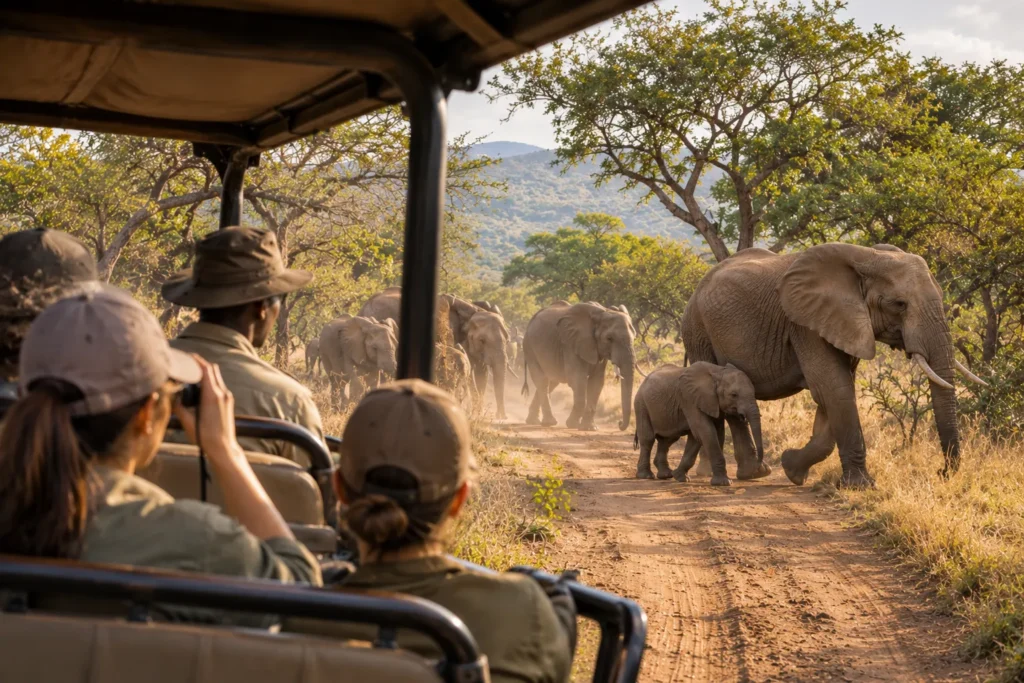
Kruger National Park in South Africa and Serengeti National Park in Tanzania are two of Africa’s most extraordinary wildlife destinations. Both offer exceptional animal encounters, diverse landscapes and unforgettable safari experiences, but the way you explore them can be remarkably different.
Kruger is renowned for its accessibility, Big Five sightings and flexible safari options, while the Serengeti is celebrated for its vast savannahs, abundant predators and the spectacular Great Migration.
Choosing between them depends on your budget, travel dates, preferred safari style and the wildlife experiences you dream of witnessing.
In this guide, we compare Kruger vs Serengeti to help you decide which destination is best suited to your African safari adventure.
Kruger vs Serengeti: Understanding the two destinations
Kruger National Park, South Africa
Located in northeastern South Africa, Kruger National Park covers approximately 19,485 square kilometres across the provinces of Limpopo and Mpumalanga.
Its landscapes include dense bushveld, woodland, open grasslands, rocky hills and extensive river systems. This environmental diversity supports an impressive range of mammals, birds and reptiles.
Kruger is particularly attractive because visitors can explore independently or join professionally guided safaris. Its well-developed infrastructure makes it one of Africa’s most accessible wildlife destinations.
The neighbouring private reserves of Greater Kruger further expand the safari experience, offering exclusive lodges, specialised guiding and more controlled wildlife encounters.
Serengeti National Park, Tanzania
Serengeti National Park covers approximately 14,763 square kilometres in northern Tanzania and forms part of the larger Serengeti-Mara ecosystem, which extends into Kenya.
The park is internationally recognised for its sweeping grasslands, rocky granite outcrops known as kopjes, scattered acacia trees and extraordinary concentrations of wildlife.
Its most celebrated natural phenomenon is the Great Migration, during which vast herds of wildebeest, zebras and gazelles move across the ecosystem in search of fresh grazing and water.
Unlike Kruger, the Serengeti is predominantly explored through professionally guided safaris, often as part of a longer journey through Tanzania’s northern wildlife circuit.
Kruger vs Serengeti: Key differences at a glance
| Feature | Kruger National Park | Serengeti National Park |
|---|---|---|
| Country | South Africa | Tanzania |
| Size | 19,485 km² | 14,763 km² |
| Landscape | Bushveld, woodlands and rivers | Vast plains, savannahs and kopjes |
| Big Five | Present | Present |
| Great Migration | No comparable migration | Yes |
| Self-drive safaris | Widely accessible | Possible but less common |
| Guided safaris | Widely available | Most popular option |
| Accommodation | Camping, rest camps and luxury lodges | Campsites, tented camps and luxury lodges |
| Budget | Generally more affordable | Generally more expensive |
| Accessibility | Excellent road and air connections | Road transfers and bush flights |
| Signature experience | Big Five and independent exploration | Great Migration and predator encounters |
| Best travel season | May to September for dry-season viewing | Year-round, depending on location |
Wildlife viewing: Which park has better wildlife?
Big Five sightings in Kruger
Kruger is an excellent destination for travellers hoping to encounter the Big Five: lions, leopards, elephants, buffaloes and rhinos.
Its diverse habitats also support giraffes, hippos, zebras, hyenas and African wild dogs, alongside an exceptional variety of birdlife.
Rhino sightings are generally more achievable in the Kruger region than in the Serengeti, although encounters remain unpredictable.
For travellers particularly interested in leopards, the neighbouring private reserves of Greater Kruger can provide rewarding opportunities through experienced tracking teams and carefully managed game drives.
Kruger’s thicker vegetation can sometimes make animals more challenging to locate, but this also adds an exciting element of discovery to each safari.
Predator encounters in the Serengeti
The Serengeti is particularly famous for its remarkable predator populations.
Lions, cheetahs, leopards and spotted hyenas inhabit the ecosystem, benefiting from the abundance of grazing animals throughout the year.
The open grasslands often provide excellent visibility, allowing visitors to observe hunting behaviour, territorial interactions and large lion prides across expansive landscapes.
Although all members of the Big Five inhabit the Serengeti, black rhinos are relatively elusive and considerably more difficult to encounter.
For travellers interested in predator behaviour and dramatic wildlife interactions, the Serengeti is an outstanding choice.
The Great Migration: Serengeti’s defining experience
One of the most significant differences between Kruger and the Serengeti is the Great Migration.
More than a million wildebeest, accompanied by large numbers of zebras and gazelles, travel through the Serengeti-Mara ecosystem in a continuous cycle influenced by rainfall and grazing conditions.
The migration offers several distinct experiences throughout the year:
- January to March: Calving season across the southern Serengeti ecosystem and Ndutu area.
- April to May: Herds gradually move towards central and western areas.
- May to July: Migration activity in the Western Corridor and towards northern regions.
- July to October: Potential Mara River crossings in the northern Serengeti.
- November to December: Herds generally begin returning towards the southern plains.
These movements are approximate and can change according to environmental conditions. River crossings, in particular, are unpredictable and cannot be guaranteed.
Kruger does not experience a comparable large-scale annual migration. Instead, its appeal lies in diverse resident wildlife populations that offer rewarding encounters throughout the year.
Safari experiences: Self-drive vs guided exploration
Exploring Kruger independently
Kruger is one of the few major African safari destinations where independent travel is relatively straightforward.
Its extensive network of paved and gravel roads allows visitors to explore using a rental vehicle, choose their own routes and spend time at sightings without following a guided itinerary.
Rest camps, picnic areas, fuel stations and shops make multi-day self-drive safaris practical for many travellers.
Those who prefer professional guidance can join organised game drives, bush walks and night drives or stay at a lodge in Greater Kruger.
This flexibility makes Kruger particularly appealing to travellers who enjoy organising their own adventures.
Experiencing the Serengeti with a guide
Although self-drive safaris are possible in the Serengeti, most international visitors choose organised tours with experienced local guides.
The park’s remote location, extensive unpaved roads and changing wildlife movements make professional guidance particularly valuable.
Safari days often involve extended game drives across different habitats, with picnic lunches in designated areas and opportunities to follow wildlife activity throughout the day.
Visitors can also experience the Serengeti from above on a sunrise hot air balloon safari, offering a spectacular perspective of its expansive landscapes.
Best time to visit Kruger and Serengeti
When to visit Kruger National Park
The dry winter months, generally from May to September, are particularly favourable for wildlife viewing.
Vegetation becomes thinner, and animals frequently gather around rivers and remaining water sources, making them easier to locate.
The wetter summer months bring lush landscapes, newborn animals and excellent birdwatching opportunities. However, thicker vegetation can make wildlife more difficult to spot.
Kruger remains a rewarding safari destination throughout the year.
When to visit Serengeti National Park
The best time to visit the Serengeti depends largely on the experience you want.
The southern ecosystem is especially attractive during the early-year calving season, while the northern Serengeti becomes popular during the months associated with Mara River crossings.
Central Serengeti offers excellent resident wildlife viewing throughout the year, making it a dependable option for travellers who cannot plan around migration movements.
Rather than choosing a month alone, Serengeti visitors should select accommodation in the region most suited to their travel dates.
Safari costs: Is Kruger cheaper than the Serengeti?
Kruger is generally the more affordable destination, particularly for independent travellers.
Budget-conscious visitors can rent a standard vehicle, stay in public rest camps, prepare their own meals and organise their daily game drives.
The Serengeti typically involves higher expenses due to park fees, specialised safari vehicles, professional guiding and the logistical costs of operating accommodation in remote wilderness areas.
However, both destinations offer a broad range of accommodation standards.
Luxury lodges in Greater Kruger can be considerably more expensive than budget camping safaris in Tanzania. Ultimately, the cost depends on the accommodation, transport arrangements, season and activities included in your itinerary.
Accommodation and accessibility
Kruger offers everything from simple campsites and self-catering bungalows to exclusive lodges in private reserves. Its proximity to regional airports and established road connections from Johannesburg makes it relatively easy to incorporate into a South African holiday.
The Serengeti offers traditional tented camps, mobile migration camps, permanent lodges and luxury wilderness retreats.
Visitors typically travel overland from Arusha through Tanzania’s northern safari circuit or take domestic flights to airstrips located within different regions of the park.
Mobile camps are a particularly distinctive feature of the Serengeti, as some relocate seasonally to remain closer to migration activity.
Which destination is better for your travel style?
First-time safari travellers
Kruger is an excellent introduction to African safaris thanks to its accessible infrastructure, diverse wildlife and flexible travel arrangements.
The Serengeti is equally rewarding for first-time visitors seeking a fully guided experience centred around iconic African landscapes and extraordinary wildlife concentrations.
Families with children
Kruger generally provides greater flexibility for families, particularly those travelling with younger children.
The Serengeti can also offer memorable family adventures, although longer transfers, extended game drives and lodge age restrictions require additional planning.
Couples and honeymooners
Both destinations offer romantic wilderness retreats. Greater Kruger excels in intimate luxury lodges and personalised service, while the Serengeti provides spectacular sunsets, remote tented accommodation and unforgettable balloon safari experiences.
Wildlife photographers
Kruger offers rewarding opportunities for photographing individual animals, woodland wildlife and birdlife.
The Serengeti is particularly suited to wide-angle wildlife photography, dramatic predator interactions and images capturing enormous herds against expansive African horizons.
Kruger or Serengeti: Which safari should you choose?
Choose Kruger if you value independence, accessible travel, affordable accommodation and excellent opportunities to encounter the Big Five.
Choose the Serengeti if your dream safari involves endless savannahs, impressive predator populations, migrating herds and immersive guided wildlife experiences.
Neither destination is universally better. Each offers a distinctive interpretation of the African wilderness, shaped by its landscapes, wildlife movements and approach to safari travel.
Whether you are planning your first African adventure or returning to discover a different ecosystem, both parks deserve a place on your safari wish list.
Explore more of our WhySafari destination guides to discover Africa’s most remarkable wildlife experiences and plan a journey that matches your interests, budget and travel aspirations.
Frequently asked questions
Three to five full safari days in either park provide a good introduction to its wildlife and landscapes. Longer stays are recommended for exploring multiple regions or following seasonal migration activity.
Yes, although the parks are located in different countries and require international travel connections. A combined itinerary of approximately two weeks or longer allows for more comfortable transfers and meaningful wildlife experiences.
Both destinations have a malaria risk. Travellers should consult a healthcare professional before departure for personalised advice about preventative medication and mosquito protection.
Kruger and its neighbouring reserves are generally a stronger choice for African wild dog sightings. These endangered predators are highly mobile, however, and encounters are never guaranteed.
Crowd levels vary considerably by location and season. Southern Kruger can become busy during holidays, while popular migration crossings and predator sightings in the Serengeti may attract numerous safari vehicles.
Yes. Kruger can be combined with destinations along South Africa’s coastline or neighbouring Mozambique, while the Serengeti pairs particularly well with the tropical beaches of Zanzibar.
Yes, authorised guided walking safaris are available in both destinations. Availability depends on the location, accommodation, local regulations and minimum age requirements.
Both parks support hundreds of bird species. The wetter months are especially rewarding for birdwatchers because of seasonal migrants, breeding activity and more abundant vegetation.
South Africa and Tanzania have separate immigration requirements. Visa eligibility depends on your nationality, passport and travel arrangements, so check the relevant official requirements before booking.
Kruger may be easier to navigate because of its established infrastructure and accessible road network. Both destinations have accommodation providers capable of arranging adapted safari experiences, but specific accessibility requirements should be discussed before booking.