When most people picture an African safari, they imagine exploring the bush in an open 4×4 vehicle. But in northern Kenya, there’s another way to experience the wilderness—one that’s slower, quieter, and deeply connected to local tradition.
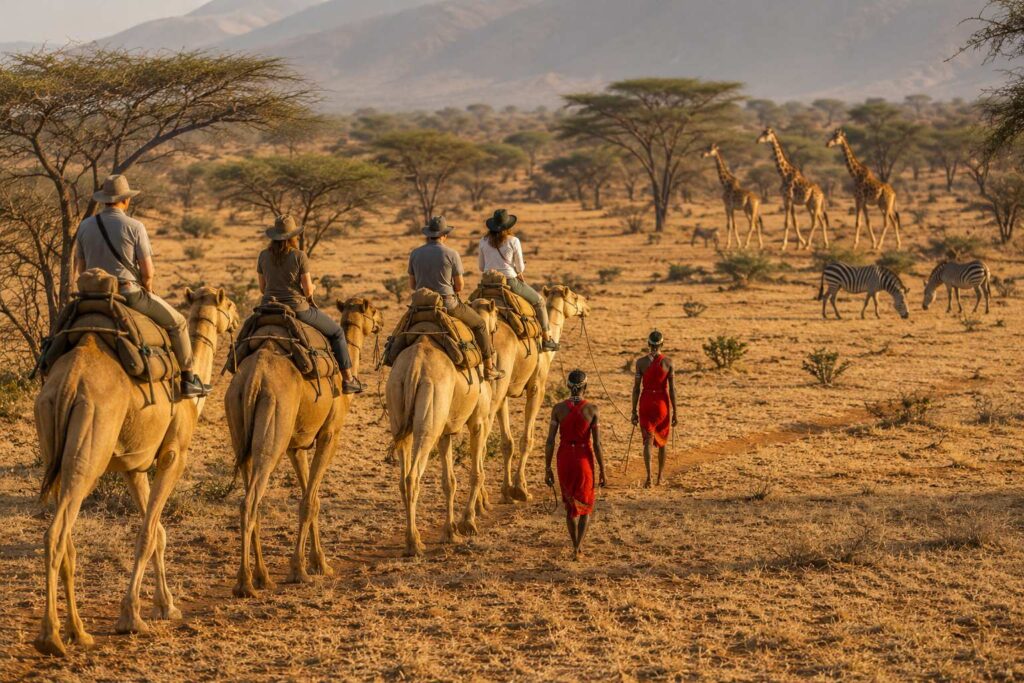
Camelback safaris offer the chance to travel through Samburu’s semi-arid landscapes much as traders, nomadic communities, and explorers have done for centuries. Accompanied by experienced Samburu guides, you’ll move at a relaxed pace through acacia woodlands, dry riverbeds, and rocky hills while discovering wildlife from an entirely different perspective.
Although they don’t replace traditional game drives, camel safaris provide one of Kenya’s most authentic and memorable safari experiences.
Here’s everything you need to know before booking one.
What is a camelback safari?
A camelback safari is a guided wildlife excursion that uses camels as the primary mode of transport instead of vehicles.
Depending on the itinerary, guests may:
- Ride a camel.
- Walk alongside the camel caravan.
- Combine both throughout the day.
The emphasis isn’t on covering long distances but on experiencing the landscape at a slower pace while learning about wildlife, traditional culture, and the fragile ecology of northern Kenya.
Many excursions last a few hours, while others become multi-day wilderness adventures with fly camping under the stars.
Why camels?
Camels have been part of life in northern Kenya for generations.
For many Samburu communities, they are highly valued because they:
- Thrive in dry climates.
- Travel long distances with little water.
- Carry equipment efficiently.
- Move comfortably across rough terrain.
Their calm, steady pace makes them well suited to exploring areas where vehicles may feel intrusive.
Traveling by camel also creates a much quieter experience, allowing visitors to notice birds, smaller wildlife, and subtle details of the landscape that are often missed on faster game drives.
Where do camel safaris take place?
Although people often refer to “camel safaris in Samburu,” many experiences operate in conservancies surrounding Samburu National Reserve rather than inside the reserve itself.
Private conservancies and community-managed lands allow activities that are generally not offered within the national reserve, including camel trekking and guided bush walks.
These areas support many of the same wildlife species while offering a more immersive and flexible safari experience.
Your lodge or safari operator will explain exactly where your excursion takes place.
What wildlife can you see?
Camel safaris focus on observation rather than approaching large predators.
Common sightings include:
- Reticulated giraffes
- Grevy’s zebras
- Beisa oryx
- Gerenuks
- Dik-diks
- Elephants
- Warthogs
- Numerous birds
Because the pace is slower, guides often spend more time interpreting tracks, plants, insects, and animal behavior than they would during a vehicle-based safari.
Predators are less frequently encountered, but guides remain constantly alert and carefully choose routes based on current wildlife activity.
Riding vs walking
One of the biggest surprises for first-time participants is that camel safaris often involve both riding and walking.
Guests may ride for part of the journey before dismounting to explore interesting areas on foot while the camels continue carrying supplies.
Walking beside the caravan provides opportunities to:
- Learn animal tracking.
- Identify medicinal plants.
- Observe birds.
- Photograph landscapes.
- Interact with Samburu guides.
The combination keeps the experience varied and physically comfortable.
Meeting Samburu guides
One of the highlights of a camel safari is spending time with Samburu guides whose knowledge comes from generations of living alongside wildlife.
Throughout the journey, guides explain:
- Traditional uses of local plants.
- Wildlife behavior.
- Animal tracks.
- Survival skills.
- Livestock traditions.
- Local history.
These conversations often become as memorable as the wildlife itself.
The experience offers genuine cultural insight rather than simply transporting visitors through the landscape.
Is it comfortable?
Most visitors are pleasantly surprised.
Camels move with a slow, rhythmic gait that’s generally easy to adapt to after a few minutes.
Modern safari saddles provide significantly more comfort than traditional riding equipment, although you’ll still notice the camel’s distinctive swaying movement.
Comfortable clothing and relaxed expectations help make the experience enjoyable.
Those who prefer not to ride continuously can often alternate between walking and riding.
Is it safe?
Yes, when operated by experienced professionals.
Safari camels are carefully trained and accustomed to carrying visitors.
Guides remain with the group throughout the excursion and carefully monitor wildlife, terrain, and weather conditions.
Before departure, guests receive a short briefing covering:
- Mounting and dismounting.
- Riding posture.
- Camel behavior.
- Safety around wildlife.
- Group communication.
As with any safari activity, following guide instructions is essential.
What should you wear?
Comfort and sun protection are the priorities.
Pack:
- Lightweight long trousers.
- Long-sleeved shirt.
- Wide-brimmed hat.
- Sunglasses.
- Sunscreen.
- Comfortable walking shoes.
- Refillable water bottle.
Neutral colors such as khaki, olive, beige, and brown remain the best choice for safari activities.
Who are camel safaris best for?
Camel safaris appeal to travelers seeking a slower and more immersive experience.
They’re especially well suited to:
- Repeat safari visitors.
- Nature enthusiasts.
- Photographers.
- Couples.
- Adventure travelers.
- Cultural travelers.
If your primary goal is seeing predators or covering large distances, traditional game drives remain the better option.
Many visitors choose to combine both experiences for the best of each world.
Can children participate?
Many shorter camel excursions welcome families, although minimum age requirements vary by operator.
Some lodges offer child-friendly camel rides around camp, while longer wilderness treks may be restricted to older children and adults.
Always confirm age limits before booking.
Multi-day camel expeditions
For travelers seeking a deeper wilderness experience, several operators offer multi-day camel-supported safaris.
These journeys typically include:
- Mobile camps.
- Bush dining.
- Guided walks.
- Wildlife viewing.
- Cultural encounters.
- Nights beneath the stars.
Camels transport luggage and equipment while guests alternate between riding and walking.
These expeditions provide one of Kenya’s most authentic adventure travel experiences.
Why choose a camel safari?
Camelback safaris aren’t designed to replace traditional game drives.
Instead, they offer something different:
- A slower pace.
- Greater connection with the landscape.
- Rich cultural interaction.
- Unique photography opportunities.
- Quiet exploration.
- A deeper appreciation for northern Kenya.
Many travelers say it’s one of the experiences they remember long after returning home.
Conclusion
Camelback safaris reveal a side of Samburu that few visitors experience. Moving quietly through the landscape alongside experienced Samburu guides offers a deeper understanding of northern Kenya’s wildlife, culture, and history than a vehicle alone can provide.
Whether you choose a half-day ride or a multi-day expedition, a camel safari complements traditional game drives by slowing the pace and allowing you to experience the bush from a fresh perspective. It’s an unforgettable way to connect with one of Kenya’s most distinctive safari regions.
For more Kenya safari guides, adventure travel ideas, and destination planning tips, continue exploring the WhySafari blog.
FAQs
Many camel safaris operate in the conservancies surrounding Samburu rather than inside the national reserve itself, where activity regulations differ.
Most people adapt quickly. The movement feels unusual at first but becomes comfortable after a few minutes.
You may see several members of the Samburu Special Five, especially Grevy’s zebra, reticulated giraffe, Beisa oryx, and gerenuk, depending on your route.
Yes. Professional operators use trained camels and experienced Samburu guides who carefully manage the route and monitor wildlife throughout the excursion.
Options range from short two- or three-hour excursions to full-day adventures and multi-day wilderness expeditions.
Lightweight neutral-colored clothing, comfortable walking shoes, a hat, sunscreen, and sunglasses are ideal for Samburu’s warm, semi-arid climate.
Many shorter experiences welcome children, although minimum age requirements vary depending on the operator and the length of the safari.