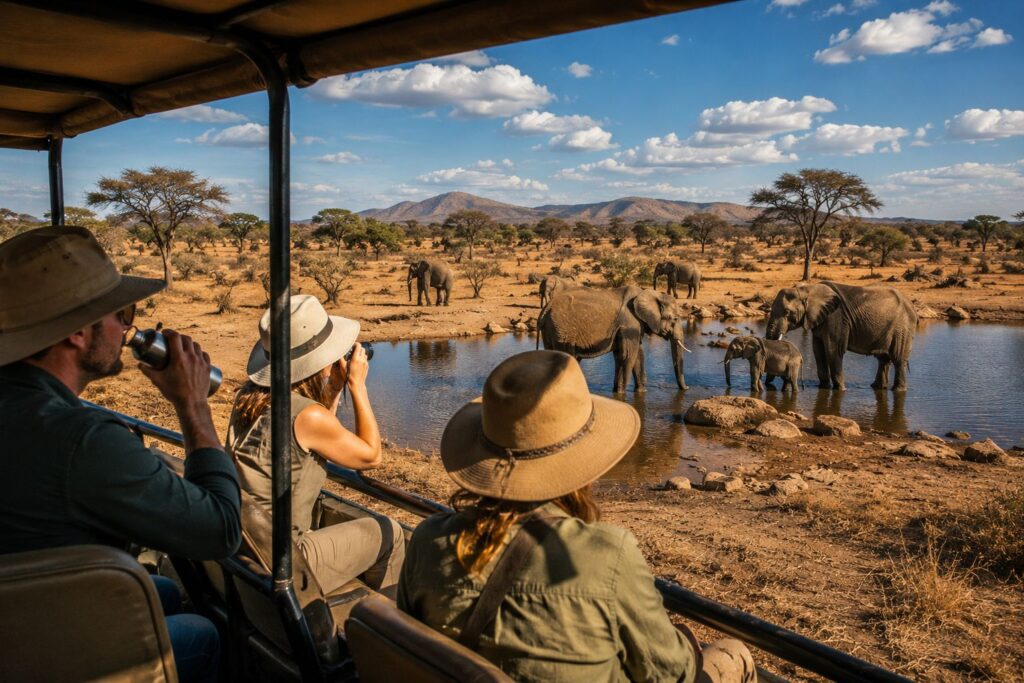
A safari is all about spending time outdoors, whether you’re exploring vast savannahs, watching elephants gather at a waterhole, or tracking wildlife on an early morning game drive. But while most travelers focus on packing cameras and binoculars, many underestimate one of the biggest challenges of an African safari: the heat.
Depending on where and when you travel, daytime temperatures can easily exceed 35°C (95°F), especially in destinations like Botswana, northern Kenya, Zambia, and parts of South Africa during the summer months.
Fortunately, staying safe in hot weather is straightforward with a little preparation. By understanding how heat affects your body and taking simple preventive measures, you can enjoy your safari comfortably while reducing the risk of dehydration, heat exhaustion, and sunstroke.
Why safaris can feel hotter than expected
Even if you’re used to warm climates, a safari presents unique conditions.
Many game drives take place in open vehicles with little shade, while walking safaris expose you directly to the sun. Dry air, dust, long hours outdoors, and excitement can also make you forget to drink enough water.
Several factors contribute to heat stress, including:
- Strong ultraviolet (UV) radiation
- Long periods in direct sunlight
- High daytime temperatures
- Low humidity in some regions
- Physical activity during walks
- Limited awareness of dehydration
Because you may not notice symptoms immediately, prevention is much easier than treatment.
Start hydrating before you feel thirsty
One of the most common mistakes travelers make is waiting until they feel thirsty.
Thirst is often a sign that your body has already begun to lose more fluids than it ideally should.
Instead:
- Drink water regularly throughout the day.
- Begin hydrating before morning game drives.
- Continue drinking during meals and breaks.
- Increase your fluid intake on especially hot days.
Carrying a reusable water bottle makes it much easier to maintain good hydration throughout your safari.
Recognize the early signs of dehydration
Dehydration develops gradually.
Early symptoms may include:
- Dry mouth
- Headache
- Fatigue
- Dark-colored urine
- Dizziness
- Muscle cramps
- Difficulty concentrating
Ignoring these warning signs can lead to more serious heat-related illness.
If you begin feeling unwell, move into shade, drink fluids slowly, and inform your guide or travel companions.
Understanding heat exhaustion vs. heatstroke
It’s important to distinguish between heat exhaustion and heatstroke.
Heat exhaustion
Heat exhaustion occurs when the body loses excessive water and salt through sweating.
Symptoms may include:
- Heavy sweating
- Weakness
- Nausea
- Dizziness
- Cool, clammy skin
- Rapid pulse
With prompt cooling, rest, and hydration, people often recover well.
Heatstroke
Heatstroke is a medical emergency.
Possible warning signs include:
- Confusion
- Loss of consciousness
- Very high body temperature
- Hot, dry skin (although sweating may still occur in some cases)
- Seizures
- Difficulty speaking
If heatstroke is suspected, seek immediate medical assistance while beginning rapid cooling measures according to local emergency guidance.
Fortunately, severe heat illness is uncommon among safari travelers who take sensible precautions.
Dress for the climate
The right clothing makes a significant difference.
Choose:
- Lightweight fabrics
- Breathable materials
- Loose-fitting clothing
- Long sleeves for sun protection
- Long trousers for walking safaris
- Neutral safari colors such as khaki, olive, beige, or gray
Technical outdoor fabrics that wick moisture away from the skin can help you remain comfortable throughout the day.
Protect yourself from the sun
Heat and sun exposure go hand in hand.
Essential sun protection includes:
- Wide-brimmed hat
- UV-protective sunglasses
- Broad-spectrum sunscreen (SPF 30 or higher)
- Lip balm with SPF
Apply sunscreen before heading out and reapply it regularly, especially after sweating.
Don’t forget commonly missed areas such as the ears, neck, and backs of your hands.
Take advantage of safari schedules
Fortunately, safari itineraries naturally help visitors avoid the hottest part of the day.
Most game drives begin:
- Shortly after sunrise
- Late in the afternoon
Many lodges schedule several hours of relaxation during midday when temperatures peak.
Rather than trying to stay active all day, use this time to:
- Rest
- Swim
- Read
- Enjoy lunch
- Recharge your camera batteries
- Rehydrate
Following the natural rhythm of the safari is one of the easiest ways to stay comfortable.
Eat regularly
Food also plays an important role in maintaining energy levels.
During hot weather:
- Don’t skip breakfast before morning drives.
- Eat balanced meals.
- Include fruits with high water content when available.
- Avoid excessive alcohol during the hottest part of the day.
Electrolyte-rich drinks may also be helpful after prolonged sweating, particularly during walking safaris or exceptionally hot conditions.
Walking safaris require extra preparation
Walking safaris increase physical activity and exposure to the elements.
Before setting out:
- Drink plenty of water.
- Wear a hat.
- Apply sunscreen.
- Inform your guide if you begin feeling unwell.
- Pace yourself.
Professional guides carefully monitor guests and often adjust walking distances according to weather conditions.
Never hesitate to mention if you’re struggling with the heat.
Children and older travelers
Young children and older adults can be more susceptible to heat-related illness.
Extra care includes:
- Encouraging frequent drinks.
- Taking more breaks.
- Wearing lightweight clothing.
- Avoiding unnecessary midday exposure.
Families should monitor children closely, as they may become dehydrated more quickly than adults.
Older travelers should also speak with their healthcare provider before departure if they have medical conditions or take medications that may affect heat tolerance.
Alcohol and caffeine
Both alcohol and excessive caffeine may contribute to dehydration in some circumstances.
That doesn’t mean you need to avoid a traditional safari sundowner altogether.
Simply balance alcoholic beverages with plenty of water before and afterward.
Moderation is key, particularly on very hot days.
Don’t ignore your guide’s advice
Safari guides work outdoors every day and understand local conditions extremely well.
If your guide recommends:
- Drinking more water
- Resting in the shade
- Slowing your pace
- Returning to camp earlier than planned
follow their advice.
Their decisions are based on experience and are designed to keep everyone safe.
Packing checklist for hot-weather safaris
A few simple items can make a big difference.
Pack:
- Reusable water bottle
- Wide-brimmed hat
- Lightweight clothing
- Sunglasses
- Broad-spectrum sunscreen
- Lip balm with SPF
- Electrolyte tablets or sachets (if recommended by your healthcare provider)
- Cooling towel (optional)
These lightweight essentials take up very little luggage space but greatly improve comfort.
Can you still enjoy a safari in hot weather?
Absolutely.
Millions of people visit African safari destinations every year during warm seasons without experiencing serious heat-related problems.
The key is adjusting your expectations and respecting the climate.
Drink water consistently, wear appropriate clothing, avoid prolonged midday exposure, and listen to your body.
With these simple habits, the heat becomes just another part of the African adventure rather than something to fear.
Conclusion
Warm weather is part of the safari experience, but it doesn’t have to limit your enjoyment. By staying hydrated, dressing appropriately, protecting yourself from the sun, and recognizing the early signs of heat-related illness, you can explore Africa’s extraordinary wildlife safely and comfortably.
Most safari itineraries are already designed around the coolest parts of the day, making it easy to balance adventure with sensible precautions. With a little preparation, you’ll spend less time worrying about the heat and more time enjoying unforgettable wildlife encounters.
For more safari health tips, packing guides, and destination advice, continue exploring the WhySafari blog.
FAQs
Fluid needs vary depending on the climate and your activity level, but drinking regularly throughout the day is more effective than waiting until you feel thirsty.
Heat exhaustion is caused by excessive fluid and salt loss and usually improves with cooling and hydration. Heatstroke is a medical emergency requiring immediate medical attention.
Yes. UV exposure can be intense even on cloudy days, particularly during long game drives in open vehicles.
Choose lightweight, breathable, loose-fitting clothing in neutral colors, along with a wide-brimmed hat and sunglasses.
Policies vary by destination and accommodation. Follow your lodge or guide’s advice regarding safe drinking water and use bottled or treated water where recommended.
Yes. Professional guides adjust activities according to weather conditions and monitor guests closely, but staying hydrated and communicating if you feel unwell is essential.
They can be useful during very hot conditions or physically demanding activities, particularly if you’re sweating heavily. If you have health conditions or dietary restrictions, consult your healthcare provider before using them.