Few places on Earth rival the Serengeti when it comes to spotting Africa’s iconic big cats. Vast open plains, abundant prey, and a healthy, protected ecosystem make Serengeti National Park one of the world’s premier destinations for observing predators in their natural habitat.
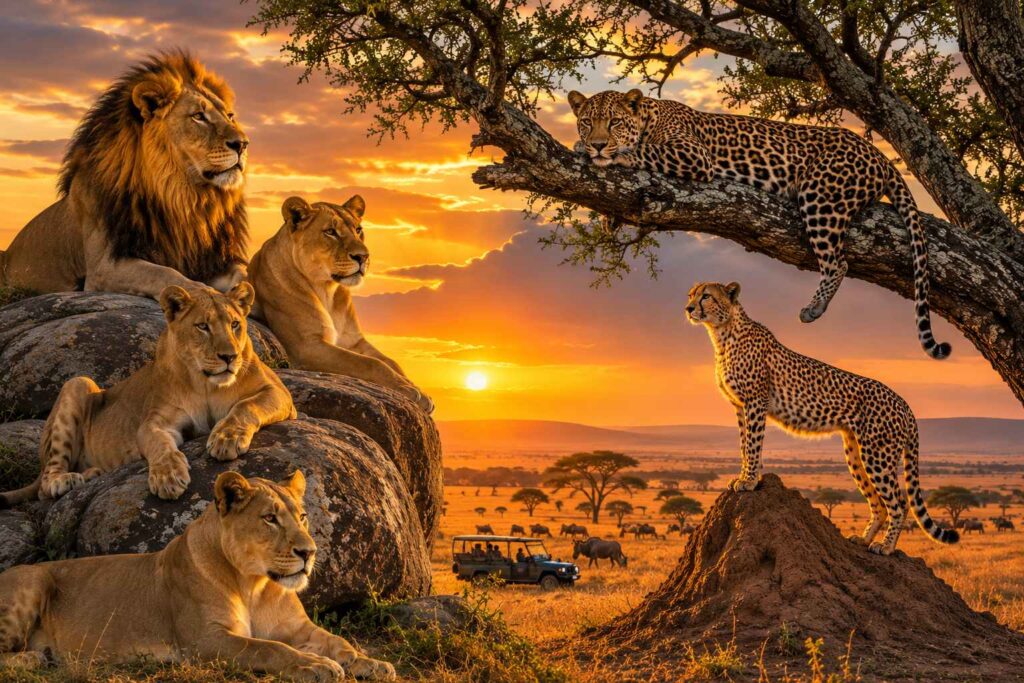
Whether you’re dreaming of watching a pride of lions resting on a granite kopje, a leopard draped across an acacia tree, or a cheetah scanning the horizon before a high-speed chase, the Serengeti offers exceptional opportunities throughout the year.
Of course, these are wild animals, and sightings are never guaranteed. But understanding where each species prefers to live—and how they behave—can dramatically improve your chances of memorable encounters.
Why the Serengeti is a paradise for big cats
The Serengeti supports one of the highest densities of predators in Africa.
Several factors contribute to this remarkable abundance:
- Vast protected landscapes
- Healthy populations of wildebeest, zebras, gazelles, and antelope
- Diverse habitats
- Minimal habitat fragmentation
- The annual Great Migration
With millions of herbivores moving through the ecosystem each year, predators have access to an extraordinary food supply.
As a result, lions, leopards, and cheetahs all thrive here, each occupying its own ecological niche.
Lions: The kings of the Serengeti
The Serengeti is perhaps best known for its lions.
The park supports one of Africa’s largest lion populations, with numerous resident prides spread across different regions.
Unlike many predators, lions are highly social and live in family groups known as prides.
A typical pride may include:
- Several related females
- Cubs of different ages
- One or more dominant males
Watching pride dynamics—playful cubs, cooperative hunting, and territorial interactions—is often one of the highlights of a safari.
Where to find lions
Lions occur throughout the Serengeti, but certain areas are especially productive.
Excellent lion habitat includes:
- Central Serengeti (Seronera)
- Eastern Serengeti
- Southern short-grass plains during calving season
- Western Corridor
- Northern Serengeti during the migration
Granite kopjes are particularly reliable places to search.
These rocky outcrops provide elevated viewpoints, shade, and ideal resting places after a night’s hunting.
Early morning and late afternoon are generally the best times to see lions active.
Leopards: Masters of camouflage
Leopards are among Africa’s most elusive predators.
Unlike lions, they are solitary and rely on stealth rather than strength in numbers.
Their beautiful spotted coats blend remarkably well into woodland and riverine vegetation, making them surprisingly difficult to detect.
Many first-time safari visitors drive past leopards without realizing one is quietly watching from a nearby tree.
Fortunately, experienced guides know exactly where to look.
Where to find leopards
Leopards prefer areas offering cover, large trees, and reliable prey.
Some of the best locations include:
- Seronera River Valley
- Riverine forests
- Acacia woodlands
- Seasonal drainage lines
- Rocky kopjes with nearby vegetation
The Central Serengeti is especially famous for its resident leopards, and many individual cats are well known to experienced guides.
Always remember to scan tree branches as carefully as the ground.
A leopard resting above eye level is a classic Serengeti sight.
Cheetahs: Built for speed
No animal symbolizes speed quite like the cheetah.
Unlike lions and leopards, cheetahs rely on open visibility rather than dense cover.
They hunt during daylight, using explosive acceleration to chase smaller antelope across the plains.
Because they avoid direct competition with larger predators whenever possible, they often select habitats where they can detect danger from long distances.
Watching a cheetah climb onto a termite mound to survey the surrounding grasslands is one of the Serengeti’s most iconic wildlife moments.
Where to find cheetahs
Cheetahs favor open country.
Look for them in:
- Southern Serengeti plains
- Eastern Serengeti
- Short-grass plains
- Areas with Thomson’s gazelles
These habitats provide ideal conditions for high-speed hunting.
Unlike leopards, cheetahs are frequently active during the day, making daytime sightings relatively common.
How the Great Migration affects big cats
The Great Migration has a major influence on predator behavior.
As millions of wildebeest and zebras move through the Serengeti ecosystem, many predators adjust their territories and hunting patterns to take advantage of this seasonal abundance.
For example:
- Lions often remain close to migration routes.
- Cheetahs target young gazelles and wildebeest calves.
- Leopards continue hunting within established territories but may benefit from increased prey numbers.
During the southern calving season between approximately January and March, predator activity can be particularly dramatic.
Thousands of newborn wildebeest create abundant hunting opportunities.
Which region is best for each species?
Lions
Best areas:
- Central Serengeti
- Southern plains during calving season
- Western Corridor
- Northern Serengeti during migration
Leopards
Best areas:
- Seronera River Valley
- Riverine forests
- Woodland habitats
Cheetahs
Best areas:
- Southern plains
- Eastern Serengeti
- Open grasslands
If your itinerary includes multiple Serengeti regions, you’ll maximize your chances of seeing all three species.
Big-cat sightings can vary significantly between regions and seasons. To understand how these wildlife areas fit into the wider park, see our complete Serengeti National Park safari guide, including the main regions, wildlife, and where to stay.
What time of day is best?
Although every safari is different, predator activity usually follows predictable patterns.
Early morning
Excellent for:
- Lions returning from hunts
- Leopards still active
- Cheetahs beginning to move
Late afternoon
Ideal for:
- Lions becoming active again
- Cheetahs hunting
- Beautiful photography light
Midday can still produce excellent sightings, but many cats spend the hottest hours resting in shade.
How guides find big cats
Professional safari guides rely on much more than luck.
They look for:
- Fresh tracks
- Alarm calls from prey species
- Vultures circling
- Recent sightings
- Animal behavior
- Years of local experience
Radio communication between guides in some concession areas may also help locate noteworthy wildlife while following responsible viewing practices.
This expertise often transforms an ordinary drive into an extraordinary wildlife experience.
Photography tips
Big cats are among the Serengeti’s most rewarding photography subjects.
To improve your chances of great images:
- Be patient.
- Keep your camera ready.
- Use early morning and late afternoon light.
- Focus on behavior rather than close-up portraits alone.
- Listen to your guide’s positioning advice.
Sometimes the most memorable photographs come after waiting quietly for several minutes while an animal begins interacting naturally with its surroundings.
Responsible wildlife viewing
The excitement of seeing a big cat should never outweigh respect for its welfare.
Good safari etiquette includes:
- Remaining quiet.
- Staying inside the vehicle.
- Avoiding sudden movements.
- Never encouraging guides to crowd wildlife.
- Appreciating natural behavior rather than chasing dramatic action.
Ethical safaris help protect both wildlife and the quality of future visitor experiences.
Conclusion
The Serengeti is one of the finest places on Earth to observe Africa’s legendary big cats. Whether you’re watching lions resting atop granite kopjes, searching riverine forests for elusive leopards, or following a cheetah across the open plains, every encounter reveals a different aspect of the park’s remarkable predator ecosystem.
While no safari can guarantee sightings, understanding each species’ preferred habitat, daily routine, and seasonal movements greatly improves your chances of success. Combine that knowledge with an experienced guide, a little patience, and several days in the park, and you’ll be well placed to experience some of Africa’s most unforgettable wildlife moments.
For more Serengeti guides, wildlife behavior articles, and safari planning advice, continue exploring the WhySafari blog.
FAQs
Lions are generally the easiest to spot thanks to their large prides and widespread distribution throughout the park.
The Seronera River Valley and other wooded riverine areas in Central Serengeti are among the best places to search for leopards.
Yes. Cheetahs are resident throughout the Serengeti, although they are most commonly found in open grassland habitats.
Yes. The migration provides abundant prey, and many predators adjust their movements and hunting behavior to take advantage of seasonal concentrations of herbivores.
Early morning and late afternoon are usually the most productive, as temperatures are cooler and predators are generally more active.
Yes, especially during a stay of three or more days that includes wildlife-rich regions such as Central Serengeti.
The Serengeti is widely considered one of Africa’s top destinations for observing lions, leopards, and cheetahs thanks to its healthy predator populations, vast protected landscapes, and abundant prey.