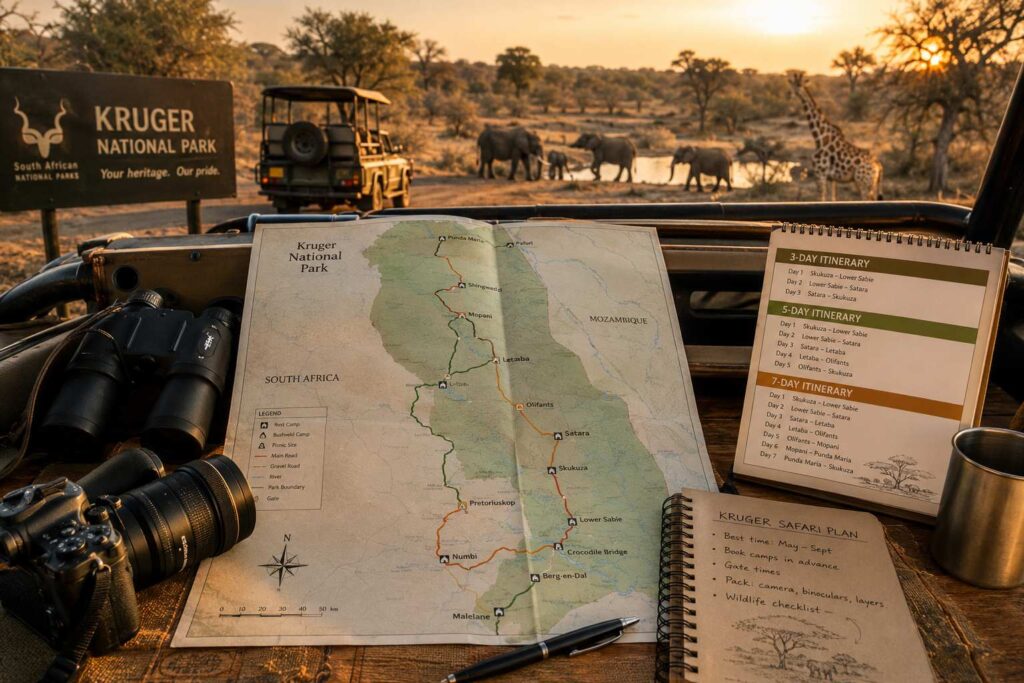
One of the first questions travelers ask when planning a safari is surprisingly simple: How many days should I spend in Kruger National Park?
The answer depends on far more than wildlife. Your budget, travel style, whether you’re self-driving or staying at a luxury lodge, and what you hope to experience all play a role.
Some visitors only have two days before flying home, while others dedicate an entire week to exploring different regions of the park. Both trips can be rewarding—they simply offer different experiences.
The good news is that there isn’t a wrong answer. Kruger is large enough to reward longer stays but accessible enough that even a short visit can deliver unforgettable wildlife encounters.
Here’s how to decide how many days are right for your safari.
Why trip length matters in Kruger
Kruger National Park covers nearly 20,000 square kilometers (7,700 square miles), making it one of Africa’s largest protected areas.
Because of its size:
- Wildlife is spread across different habitats.
- Travel distances between camps can be significant.
- Every game drive is different.
- Animal sightings are never guaranteed.
Unlike a zoo, safari depends on patience, timing, and a little luck.
The more time you spend in the park, the greater your chances of seeing a wider variety of wildlife and observing interesting animal behavior.
Is two days enough?
Two days provide a worthwhile introduction to Kruger, especially if your schedule is limited.
During a short visit, you can realistically enjoy:
- Three or four game drives
- Excellent chances of seeing elephants, giraffes, zebras, buffalo, and antelope
- Opportunities to spot predators
- Beautiful sunrise and sunset safaris
However, you’ll spend much of your time focusing on one region of the park.
A two-day itinerary works best if you’re:
- Visiting South Africa for the first time
- Combining Kruger with Cape Town or the Garden Route
- Taking a guided safari from Johannesburg
- Short on vacation time
While possible, expect a fast-paced trip.
Three days: The sweet spot for many travelers
For most visitors, three days strikes an excellent balance between time, cost, and wildlife viewing.
A typical three-day safari includes:
- Multiple morning and afternoon game drives
- Enough time to explore one region thoroughly
- Greater chances of seeing the Big Five
- Relaxed evenings at camp
- Opportunities to revisit productive wildlife areas
Three days also allow flexibility.
If one game drive is quieter than expected, you’ll have several more opportunities to explore different routes.
This is why many safari operators recommend a minimum stay of three nights.
Four to five days: A deeper safari
With four or five days, Kruger begins to reveal its full character.
Instead of rushing between wildlife sightings, you’ll have time to appreciate:
- Changing landscapes
- Birdlife
- Smaller mammals
- Animal behavior
- Different habitats
Longer stays also make it easier to combine multiple camps or regions.
For example:
- Southern Kruger for abundant wildlife
- Central Kruger for predator-rich grasslands
- Northern Kruger for quieter wilderness and birdwatching
This variety adds depth to the safari experience.
A week or more: For serious wildlife lovers
Seven days or longer transforms a safari from a holiday into a genuine immersion in nature.
With extra time, you can:
- Visit several regions
- Experience different ecosystems
- Observe changing weather
- Spend longer watching animal behavior
- Enjoy quieter days without rushing
Many repeat visitors choose week-long self-drive safaris because they appreciate exploring at a slower pace.
Rather than chasing sightings, they let the park unfold naturally.
Self-drive vs guided safari
Your travel style also affects the ideal trip length.
Self-drive safaris
Self-drive visitors often benefit from longer stays because they control their own schedule.
Additional days allow:
- Flexible routes
- Extra photography time
- Relaxed driving
- More spontaneous wildlife encounters
Guided safaris
Professional guides increase the efficiency of wildlife viewing through experience, tracking skills, and local knowledge.
Because guides often locate animals more quickly, shorter itineraries can still be highly rewarding.
Both approaches have advantages—it simply depends on your preferences.
Luxury lodge stays
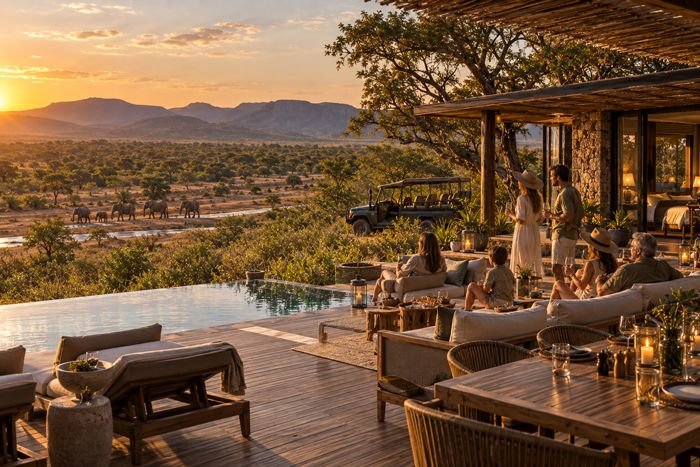
Luxury safari lodges usually recommend three nights.
This allows guests to enjoy:
- Six game drives
- Bush breakfasts
- Sundowners
- Relaxation between activities
- Spa treatments
- Walking safaris where available
Staying fewer than three nights may feel rushed, particularly given the investment involved.
Budget considerations
Your budget naturally influences trip length.
Budget-friendly options
If you’re trying to reduce costs:
- Self-drive
- Stay in SANParks rest camps
- Cook some of your own meals
- Visit during the green season
- Spend three nights rather than one
Longer stays don’t always mean dramatically higher daily costs.
Luxury safaris
Luxury lodges generally include:
- Accommodation
- Meals
- Guided game drives
- Many beverages
- Transfers within the reserve
Although nightly rates are higher, they often represent excellent overall value.
Wildlife expectations by trip length
Here’s what you can generally expect.
Two days
- Excellent introduction
- Many common species
- Possible Big Five sightings
- Limited regional exploration
Three days
- Strong chance of multiple Big Five sightings
- Relaxed pace
- Better photography opportunities
- More complete safari experience
Five days
- Greater wildlife diversity
- Multiple habitats
- Richer understanding of the ecosystem
- Improved predator opportunities
Seven days
- Comprehensive Kruger experience
- Flexibility
- Slower travel
- Exceptional photography opportunities
- Deeper appreciation of wildlife behavior
Remember that nature remains unpredictable regardless of trip length.
Combining Kruger with other destinations
Many visitors combine Kruger with:
- Cape Town
- The Panorama Route
- Victoria Falls
- Madikwe Game Reserve
- Sabi Sands
- Mozambique
If Kruger is only one stop on a longer holiday, three days usually provide a satisfying balance.
If safari is your primary reason for traveling, consider extending your stay to five days or more.
When more days matter most
Additional time becomes especially valuable if you:
- Love photography
- Enjoy birdwatching
- Want to self-drive
- Hope to visit multiple camps
- Prefer relaxed travel
- Have visited Africa before
Experienced safari travelers often discover that their favorite moments happen unexpectedly—and those moments usually require time.
Quality matters as much as quantity
It’s easy to assume that more days automatically create a better safari.
Not necessarily.
A well-planned three-day itinerary in an excellent wildlife area may be more rewarding than a rushed week spent driving long distances every day.
Choosing the right accommodation, season, guide, and region is just as important as trip length.
The goal isn’t to spend the maximum number of days in Kruger.
It’s to spend enough time to enjoy the experience without feeling rushed.
Conclusion
There’s no single perfect length for a Kruger safari, but three days is an excellent starting point for most travelers. It provides enough time to enjoy multiple game drives, explore one region thoroughly, and experience the excitement of wildlife viewing without feeling rushed.
If your budget and schedule allow, four or five days offer an even richer experience, while a week or more lets you discover the incredible diversity that makes Kruger one of Africa’s greatest safari destinations. Whatever your itinerary, the key is to match your trip length to your travel style, expectations, and priorities.
For more Kruger travel guides, safari planning advice, and destination comparisons, continue exploring the WhySafari blog.
FAQs
Yes. Three days is widely considered the ideal minimum for most visitors, offering multiple game drives and a strong chance of memorable wildlife sightings.
It’s possible, especially in southern Kruger, but sightings are never guaranteed. More time generally improves your chances.
Not at all. Many experienced safari travelers spend a week or more exploring different regions of the park at a relaxed pace.
For trips of three days or less, staying in one camp is usually more practical. Longer visits allow you to explore multiple regions by changing camps.
Yes. Extra days provide greater flexibility and allow you to explore at your own pace without rushing between destinations.
Most luxury lodges recommend at least three nights so guests can fully enjoy the included safari activities and facilities.
No. Wildlife is unpredictable, but longer stays increase your opportunities to encounter different species and observe fascinating natural behaviors.