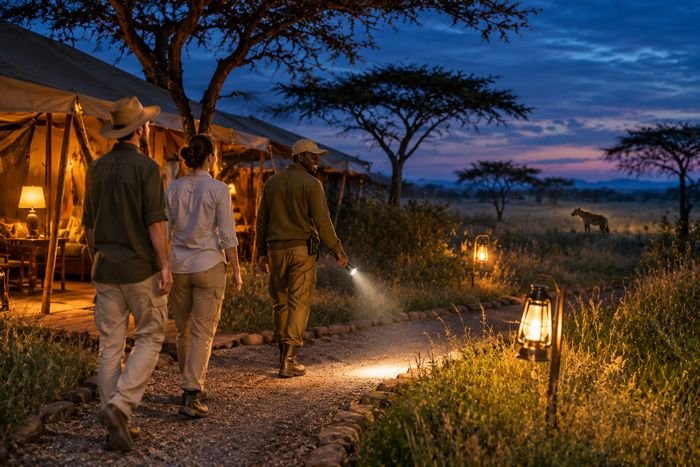
Picture two safari vehicles watching the same pride of lions in the Serengeti. In one, a couple decides to spend another hour observing the animals. In the other, six travelers agree it’s time to continue searching for elephants. Both groups enjoy an extraordinary wildlife encounter, but their experiences unfold differently.
That’s the essential difference between a private and shared Serengeti safari.
Choosing between these options affects much more than your budget. It influences your daily schedule, how long you spend at wildlife sightings, your comfort inside the vehicle, and even the atmosphere of your trip.
So, should you book a private safari vehicle or shared game drives in the Serengeti?
For families, photographers, honeymooners, and travelers who value flexibility, a private safari is often worth the additional expense. Shared safaris, meanwhile, offer excellent value for solo travelers, budget-conscious couples, and anyone who enjoys meeting fellow adventurers.
This guide compares private vs shared safaris in the Serengeti, including costs, wildlife viewing, comfort, and practical booking considerations.
Private vs shared Serengeti safari: Key differences
Both options allow you to explore the same national park and encounter its remarkable wildlife.
The difference lies primarily in who controls the experience.
| Feature | Private safari | Shared safari |
|---|---|---|
| Safari vehicle | Exclusive to your party | Shared with other travelers |
| Guide | Dedicated to your group | Shared among passengers |
| Daily schedule | More flexible | Usually predetermined |
| Wildlife stops | Based on your interests | Group preferences |
| Cost per person | Generally higher for couples | Usually more affordable |
| Photography | Greater control and space | Requires compromise |
| Social experience | More private | Opportunities to meet travelers |
| Best for | Families, couples, photographers | Solo travelers and budget-conscious visitors |
Neither option guarantees better wildlife sightings. The experience also depends on your guide, accommodation location, season, and the unpredictable movements of wild animals.
What is a private Serengeti safari?
A private safari gives you exclusive use of a safari vehicle and guide for the activities included in your booking.
You might travel as a couple, family, or group of friends, without sharing your vehicle with unrelated guests.
Most private road safaris use specially adapted 4×4 vehicles, often with pop-up roofs that provide excellent wildlife visibility.
Greater control over your daily schedule
One of the biggest advantages is flexibility.
If you’re particularly interested in leopards, your guide can dedicate more time to suitable habitats. If you encounter elephants interacting around a waterhole, you can stay and observe rather than moving on because other guests prefer something different.
Private safaris also allow you to adapt meal breaks, departure times, and the pace of game drives within park regulations.
For travelers spending several days in the Serengeti, this freedom can make the experience feel more personal.
More comfortable wildlife photography
Photographers often benefit significantly from a private vehicle.
You have more space for cameras and lenses, fewer passengers competing for viewing positions, and greater control over how long you remain at a sighting.
Your guide can also consider vehicle positioning and available light, provided this doesn’t disturb animals or violate park rules.
However, private vehicles must follow the same wildlife-viewing regulations as shared vehicles.
What is a shared Serengeti safari?
A shared safari, sometimes called a group-joining safari, allows travelers to book individual seats in a vehicle with other guests.
Groups commonly include approximately four to seven passengers, although capacities and arrangements vary.
The itinerary is usually established in advance, including departure dates, accommodation, and main destinations.
Lower costs and a social experience
The main advantage is affordability.
By sharing vehicle, fuel, and guiding expenses, travelers can reduce the cost per person.
Shared safaris can also be surprisingly social. You may meet travelers from different countries, exchange stories during game drives, and enjoy discovering wildlife together.
For solo travelers, joining a group can make a Serengeti safari more accessible without sacrificing the excitement of wildlife encounters.
Less flexibility during game drives
The biggest compromise is having to accommodate different interests.
One passenger may want to photograph birds, while another prefers searching for lions.
Your guide must balance these preferences while following the agreed itinerary.
Departure times, breaks, and return schedules are generally less flexible than on a private safari.
However, a well-organized small-group safari with an experienced guide can still deliver an outstanding experience.
Shared safari tours vs shared lodge game drives
An important distinction is that not every shared game drive is part of a budget group safari.
On a traditional group-joining road safari, you’ll often travel with the same passengers and guide throughout the itinerary.
At a fly-in safari lodge, you may have your own private room or tent but share scheduled game drives with other guests staying at the property.
This arrangement is common even at some luxury safari camps.
A private accommodation booking doesn’t automatically include a private vehicle.
If exclusive wildlife viewing matters to you, ask whether game drives are private, shared, or available as an additional paid upgrade.
How much more does a private Serengeti safari cost?
Private safari pricing depends on group size, accommodation category, travel dates, and itinerary length.
Shared tours generally have lower per-person prices because transportation and guiding costs are distributed across multiple passengers.
For broad 2026 planning, a shared group safari in northern Tanzania might cost approximately $200–$350 per person per day, while a mid-range private safari for two travelers may cost around $350–$600 per person per day.
These are indicative ranges rather than guaranteed Serengeti-only quotations. Premium fly-in camps, seasonal fees, and luxury accommodation can increase either option substantially.
Why group size matters
The cost difference becomes smaller when several people travel together.
A private vehicle carrying four or six friends distributes transportation expenses across the group.
For example, a family of four may discover that a private safari costs only moderately more per person than joining a shared departure.
Couples and solo travelers, by contrast, usually face a larger price difference.
Always compare quotations that include the same accommodation category, number of nights, park fees, and transfers.
Which option is better for wildlife viewing?
Both private and shared safaris operate in the same Serengeti wilderness.
Neither vehicle type increases the number of lions, leopards, or elephants in the park.
However, private safaris provide more control over how you experience sightings.
You can spend additional time observing animal behavior or concentrate on particular species.
Shared vehicles require compromises, but an excellent guide can still plan rewarding drives that accommodate everyone’s interests.
For general wildlife viewing, either option can work beautifully.
For specialized photography, birdwatching, or extended observation of predators, a private vehicle offers meaningful advantages.
Which Serengeti safari is better for families and couples?
Families with children often benefit from private game drives.
You can plan shorter excursions, schedule breaks, and adapt the day around younger travelers’ energy levels.
Children can ask questions without interrupting unfamiliar passengers, while parents have greater control over the family’s routine.
For honeymooners, private safaris offer additional privacy and opportunities to enjoy wildlife encounters at a relaxed pace.
However, couples who enjoy meeting people and prefer to allocate more money toward accommodation or extra safari nights may find shared drives perfectly suitable.
When should you choose a shared Serengeti safari?
A shared safari is especially attractive if you’re traveling alone, working with a limited budget, or comfortable following a structured itinerary.
It can also be a good introduction to African safaris because the operator handles transportation, scheduling, and accommodations.
For a first-time visitor without highly specific wildlife interests, a small shared group may provide everything needed for a memorable Serengeti adventure.
The key is selecting a reputable operator, confirming the maximum number of passengers, and ensuring the itinerary includes enough time for game drives.
When is a private Serengeti safari worth it?
A private safari becomes particularly valuable when flexibility is a priority.
Choose private if you want to focus on wildlife photography, explore at your own pace, or create an itinerary around specific animal interests.
It’s also worth considering for families, travelers with particular accessibility needs, or groups of friends who can share the vehicle costs.
Private arrangements may be especially useful during short trips, when maximizing every game drive matters.
However, don’t sacrifice additional nights in the Serengeti simply to book a private vehicle if the extra time would better serve your wildlife goals.
What to check before booking your safari vehicle
Before choosing either option, ask your operator about the actual vehicle and guiding arrangements.
Confirm how many passengers will share each vehicle, whether everyone has a window seat, and whether the vehicle has a pop-up roof.
Ask if game drives are private or shared, whether your guide stays with you throughout the itinerary, and how much flexibility exists around wildlife stops.
Also confirm what’s included in the price, particularly park fees, accommodation, meals, and transfers.
For fly-in safaris, check whether a private vehicle upgrade can be arranged at your camp.
These questions help prevent misunderstandings and make it easier to compare competing quotations.
Final verdict: Private or shared Serengeti safari?
The best Serengeti safari isn’t necessarily the most expensive. It’s the one that matches your travel priorities.
Choose a private safari if you value flexibility, privacy, personalized guiding, and the freedom to spend more time at particular wildlife sightings.
Choose a shared safari if affordability, social interaction, and a structured itinerary matter more to you.
For families and groups of friends, compare both options carefully because private vehicle costs can become surprisingly competitive when shared among several travelers.
Ultimately, a knowledgeable guide, a well-planned itinerary, and enough time in the wilderness matter more than whether your vehicle is exclusively yours.
For more Serengeti travel advice, safari cost comparisons, and practical itinerary guides, explore the WhySafari blog and plan your African adventure with confidence.
Frequently asked questions about private and shared Serengeti safaris
Some lodges offer private vehicle upgrades, subject to availability. However, vehicles and guides may already be fully booked during busy periods. If privacy is important, arrange the upgrade before departure.
Not always. Many operators limit passenger numbers to provide good viewing positions, but vehicle layouts differ. Ask for the seating configuration and maximum passenger count before booking.
Yes. Solo travelers can arrange a dedicated vehicle and guide, although they generally pay more because transportation costs aren’t shared. Some operators offer single-traveler packages or special rates outside peak season.
The guide will assess the situation and follow the operator’s procedures. Depending on the circumstances, the itinerary may need adjustment. Ask about emergency arrangements and schedule changes before joining a group tour.
Private vehicles can offer greater flexibility for accessibility arrangements, but accessibility isn’t guaranteed. Some operators provide adapted vehicles or additional assistance. Discuss specific mobility requirements before making a reservation.
Some operators accept guide requests, but availability is not guaranteed. Private bookings may offer more opportunities to arrange a particular guide, especially when reservations are made well in advance.
Certain lodges allow guests to reserve an exclusive vehicle for a particular day rather than their entire stay. This can be a useful compromise for photographers or travelers celebrating a special occasion.
Some camps and operators impose minimum ages for shared drives, particularly when young children could affect other passengers’ experiences. Families should confirm these restrictions and any private-vehicle requirements.