Packing for a safari in Samburu National Reserve is slightly different from packing for Kenya’s greener safari destinations. Located in the country’s arid north, Samburu is known for its hot days, cool mornings, dusty roads, and strong sunshine.
The good news is that you don’t need specialized safari clothing or expensive outdoor gear. The key is choosing lightweight, practical items that keep you comfortable in a dry, semi-arid environment while respecting local customs and making the most of your wildlife experience.
Whether you’re staying in a luxury lodge or a tented camp, this guide covers everything you should pack—and what you can leave at home.
Understanding Samburu’s climate
Before deciding what to bring, it helps to understand the conditions you’ll experience.
Samburu has a warm, semi-arid climate throughout most of the year.
Typical conditions include:
- Warm to hot daytime temperatures
- Cool mornings on early game drives
- Very strong sun
- Low humidity
- Dusty roads
- Little shade away from riverine areas
Rain can occur during Kenya’s rainy seasons, but compared to destinations like the Masai Mara, Samburu generally remains much drier.
Layering your clothing is the easiest way to stay comfortable throughout the day.
Choose lightweight, breathable clothing
Natural fabrics and technical outdoor clothing both work well.
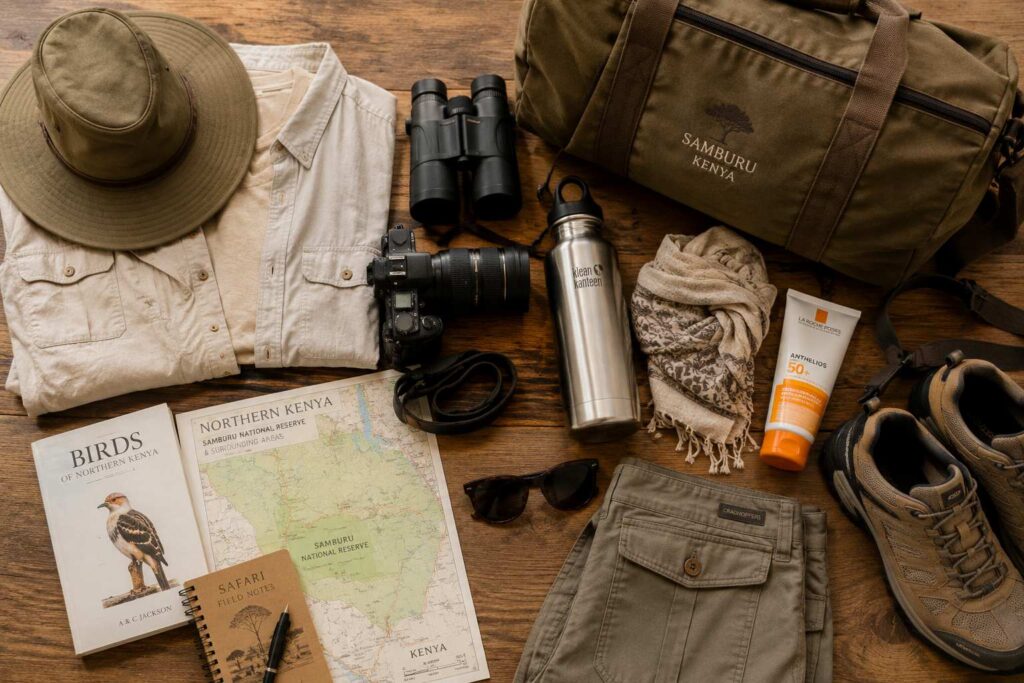
Pack:
- Lightweight shirts
- Quick-drying T-shirts
- Breathable trousers
- Convertible hiking pants
- Shorts for time around camp
- Comfortable evening clothes
Long sleeves and lightweight long trousers offer additional protection from both the sun and insects while remaining surprisingly cool.
Avoid heavy fabrics that retain heat.
Stick to neutral colors
Neutral safari colors help you blend naturally into the environment.
Good choices include:
- Khaki
- Olive green
- Beige
- Brown
- Soft gray
These shades also hide dust better than darker colors.
It’s best to avoid:
- Bright red
- Neon colors
- Fluorescent clothing
- Camouflage patterns (which may be restricted in some African countries)
- Pure white, which quickly shows dust
Neutral clothing is practical rather than mandatory, but it contributes to a more comfortable safari experience.
Bring a warm layer
Many first-time visitors are surprised by how cool early mornings can feel during open-vehicle game drives.
Even after hot afternoons, sunrise temperatures may require:
- A lightweight fleece
- Windbreaker
- Soft jacket
- Thin insulated layer
You’ll often remove it later in the morning once the temperature rises.
Comfortable footwear
Most visitors spend much of the safari inside vehicles, so heavy hiking boots are rarely necessary.
Ideal footwear includes:
- Comfortable walking shoes
- Lightweight hiking shoes
- Trail runners
- Sandals for relaxing at camp
If your itinerary includes guided bush walks in nearby conservancies, closed shoes with good grip are recommended.
Avoid brand-new footwear that hasn’t been broken in before your trip.
Protect yourself from the sun
The northern Kenyan sun is powerful year-round.
Essential items include:
- Wide-brimmed hat
- Sunglasses with UV protection
- High-SPF sunscreen
- Lip balm with sun protection
Applying sunscreen before morning game drives is much easier than trying to do it later in a moving safari vehicle.
Don’t forget insect protection
Although Samburu is relatively dry, mosquitoes and other insects can still be present, particularly near the Ewaso Ng’iro River and after rainfall.
Pack:
- Insect repellent
- Lightweight long sleeves
- Long trousers for evenings
Depending on the season and your itinerary, consult your healthcare provider about appropriate malaria prevention before traveling.
Binoculars make a huge difference
A good pair of binoculars may be the single best safari investment you can make.
They allow you to appreciate:
- Leopards resting in trees
- Distant elephants
- Rare birds
- Predator behavior
- The Samburu Special Five
Even if your guide carries binoculars, having your own significantly enhances the experience.
Camera gear
Samburu offers outstanding photography opportunities.
Consider bringing:
- Camera
- Spare batteries
- Extra memory cards
- Lens cleaning cloth
- Dust protection bag
- Portable charger
Dust is common on game drives, so keep equipment protected whenever possible.
A simple microfiber cloth quickly removes dust from lenses and camera bodies.
Daypack essentials
Carry a small backpack or daypack with:
- Water bottle
- Camera
- Binoculars
- Sunscreen
- Insect repellent
- Hat
- Sunglasses
- Personal medications
Having everything within easy reach makes game drives more enjoyable.
Luggage for fly-in safaris
If you’re flying to Samburu on a small safari aircraft, check luggage restrictions carefully.
Many domestic safari flights require:
- Soft-sided duffel bags
- Limited luggage weight (often around 15–20 kg, including hand luggage, depending on the airline)
Hard-shell suitcases are usually discouraged because they fit poorly in small aircraft cargo compartments.
What you don’t need
Many first-time safari travelers tend to overpack.
Items you can usually leave at home include:
- Formal clothing
- High heels
- Bulky jackets
- Camouflage clothing
- Excessive jewelry
- Hair dryers (often provided by lodges)
- Multiple pairs of shoes
Safari life is relaxed, and comfort matters far more than fashion.
Packing for different seasons
Although Samburu is dry year-round, a few seasonal adjustments are useful.
Dry season
Prioritize:
- Sun protection
- Lightweight clothing
- Dust protection for cameras
- Lip balm
- Plenty of reusable water bottles
Rainy seasons
Add:
- Light waterproof jacket
- Waterproof cover for your daypack
- Quick-drying clothing
- Waterproof pouch for electronics
Heavy rain is generally less frequent than in southern Kenya, but short showers can occur.
Practical travel tips
Before leaving home:
- Pack medications in your carry-on luggage.
- Bring universal power adapters if needed.
- Download offline maps.
- Carry digital copies of important documents.
- Leave space in your luggage for souvenirs, especially locally made Samburu beadwork and crafts.
Most lodges offer laundry services, allowing you to pack lighter for longer safaris.
Conclusion
Packing for Samburu is refreshingly simple. Lightweight clothing, comfortable footwear, good sun protection, and a few practical accessories are all you need to enjoy one of Kenya’s most distinctive safari destinations.
Rather than focusing on specialized safari gear, concentrate on comfort and versatility. With the right clothing and a well-planned daypack, you’ll be prepared for everything from sunrise game drives and wildlife photography to cultural visits and relaxing evenings under the African stars.
For more Kenya safari guides, packing advice, and destination planning tips, continue exploring the WhySafari blog.
FAQs
Neutral shades such as khaki, olive, beige, brown, and gray are ideal. They stay cooler, hide dust better, and blend naturally into the environment.
Not usually. Comfortable walking shoes or lightweight hiking shoes are sufficient unless your itinerary includes guided bush walks.
Generally yes. Samburu’s semi-arid climate is warmer and drier than the higher-altitude grasslands of the Masai Mara.
Yes. Early morning game drives can feel cool, especially during the dry season, so a light fleece or jacket is recommended.
Mosquitoes can be present, particularly near rivers and after rainfall. Pack insect repellent and seek medical advice about malaria prevention before traveling.
Yes. Shorts are comfortable around camp, although many visitors prefer lightweight long trousers during game drives for extra sun and insect protection.
Most luxury lodges supply basic toiletries, but it’s still a good idea to bring personal essentials and any prescription medications.