If your dream safari involves empty roads, untouched wilderness, and wildlife encounters shared with few—if any—other vehicles, Katavi National Park should be on your radar.
Tucked away in western Tanzania, Katavi is one of Africa’s last truly remote safari destinations. It lacks the fame of the Serengeti, the accessibility of Ngorongoro, and the popularity of Tarangire—but that’s exactly what makes it so extraordinary.
Here, you’ll spend your days exploring vast floodplains, ancient woodlands, and seasonal lakes where enormous herds of buffalo gather, hippos crowd shrinking pools during the dry season, and predators roam an ecosystem that feels almost unchanged by time.
For travelers seeking a genuine wilderness experience far from the usual safari circuit, Katavi may be Africa’s ultimate hidden gem.
Where is Katavi National Park?
Katavi National Park lies in western Tanzania, near the shores of Lake Tanganyika.
Covering approximately 4,500 square kilometers (1,740 square miles), it protects an isolated landscape of floodplains, rivers, miombo woodland, and seasonal lakes.
Its remote location means relatively few visitors make the journey each year, despite the park offering some of Tanzania’s most spectacular wildlife viewing.
Most travelers reach Katavi by scheduled or charter flights from Arusha, Dar es Salaam, or other safari destinations.
Why Katavi feels so wild
Unlike many famous safari parks, Katavi has remained largely untouched by mass tourism.
Several factors contribute to its wilderness atmosphere:
- Limited accommodation
- Small visitor numbers
- Vast protected landscapes
- Minimal road traffic
- Remote location
It’s entirely possible to spend an entire game drive without seeing another safari vehicle.
For many experienced travelers, this sense of solitude is every bit as memorable as the wildlife itself.
Incredible dry-season wildlife
Katavi transforms dramatically during the dry season.
As seasonal water sources disappear, wildlife concentrates around the remaining rivers and pools.
The result is extraordinary game viewing.
Visitors regularly encounter:
- Massive buffalo herds
- Elephants
- Lions
- Leopards
- Spotted hyenas
- Hippos
- Nile crocodiles
- Giraffes
- Zebras
- Topi
- Impalas
Because animals gather in predictable locations, sightings can be remarkably consistent.
The famous buffalo herds
Katavi is particularly renowned for its buffalo.
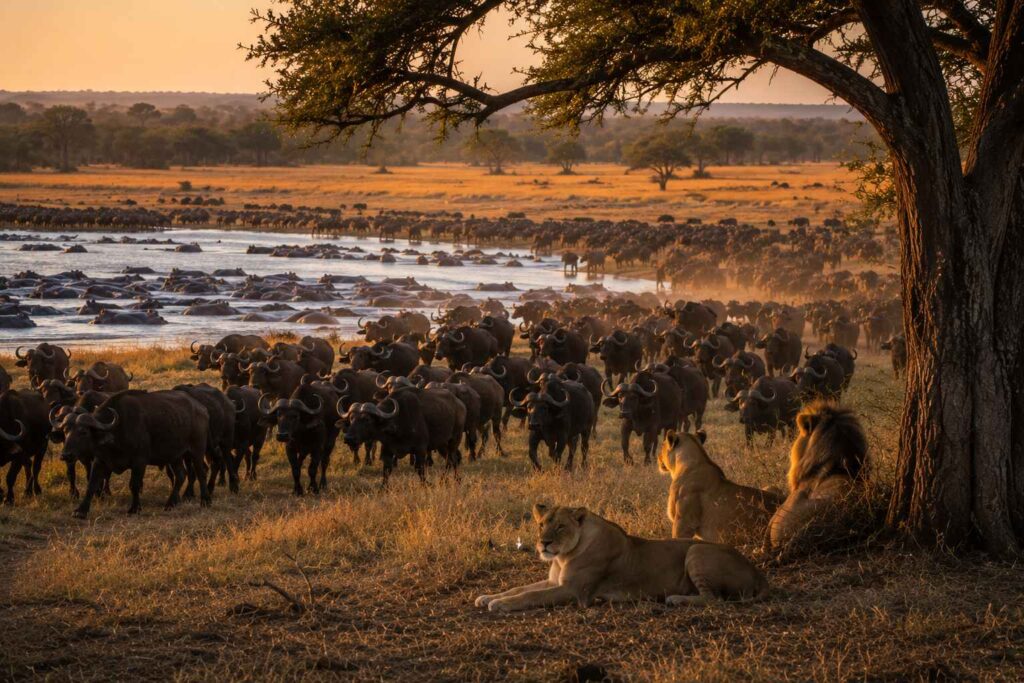
Some herds number in the hundreds or even thousands, creating one of Africa’s most impressive wildlife spectacles.
Large concentrations of buffalo naturally attract predators, especially lions.
Watching a pride carefully assess a herd before attempting a hunt is one of Katavi’s signature safari experiences.
Hippo pools like nowhere else
During the height of the dry season, Katavi’s shrinking waterholes become crowded with hippos.
Dozens—sometimes well over a hundred—may share a single remaining pool.
Competition for space leads to:
- Loud territorial displays
- Frequent vocalizations
- Dramatic interactions
- Constant movement
These gatherings provide exceptional opportunities to observe hippo behavior up close from the safety of a safari vehicle.
A paradise for predator lovers
Healthy prey populations support thriving predator numbers.
Lions are the park’s dominant hunters, but visitors may also encounter:
- Leopards
- Spotted hyenas
- African wild dogs (occasionally)
- Crocodiles along rivers
Because there are so few vehicles, predator sightings often unfold in complete peace, allowing guests to watch natural behavior without distraction.
Beautiful and diverse landscapes
Katavi is far more than wildlife.
Its varied scenery includes:
- The Katuma River
- Seasonal floodplains
- Palm-fringed wetlands
- Miombo woodland
- Open grasslands
- Tamarind and acacia trees
The changing landscapes make every game drive feel different and provide beautiful backdrops for photography.
Excellent birdwatching
More than 400 bird species have been recorded in Katavi.
Highlights include:
- Fish eagles
- Saddle-billed storks
- Pelicans
- Bee-eaters
- Kingfishers
- Herons
- Hornbills
- Raptors
Birdlife is particularly rewarding around wetlands and rivers, especially during the green season when migratory species arrive.
When is the best time to visit?
Katavi is highly seasonal.
Dry season (June to October)
This is widely considered the best time to visit.
Advantages include:
- Outstanding wildlife concentrations
- Easier game viewing
- Excellent predator activity
- Comfortable photography conditions
Many visitors specifically plan their safari for late dry season when water becomes scarce.
Green season (November to May)
Rain transforms Katavi into a lush landscape.
Visitors enjoy:
- Fresh scenery
- Breeding birds
- Dramatic skies
- Young animals
However, wildlife becomes more dispersed, and some camps close during the wettest months.
Accommodation
Katavi intentionally remains low-impact.
Accommodation options include:
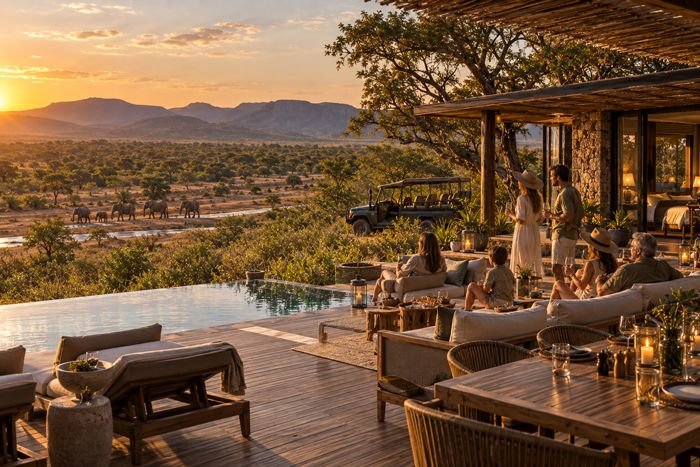
- Luxury tented camps
- Intimate safari camps
- Seasonal mobile camps
Most properties accommodate only a small number of guests, helping preserve the park’s peaceful atmosphere.
Early reservations are recommended, especially during the peak dry season.
Is Katavi suitable for first-time safari travelers?
It depends.
If your goal is to experience the Great Migration or combine several famous attractions, northern Tanzania may be a better introduction.
However, Katavi is ideal for travelers who:
- Value solitude.
- Have already visited popular parks.
- Love photography.
- Want authentic wilderness.
- Enjoy predator behavior.
- Prefer uncrowded safaris.
Many experienced safari enthusiasts rank Katavi among Africa’s finest wildlife destinations precisely because it remains so remote.
Combining Katavi with other parks
Because of its location, Katavi is often combined with:
- Mahale Mountains National Park
- Ruaha National Park
- Nyerere National Park
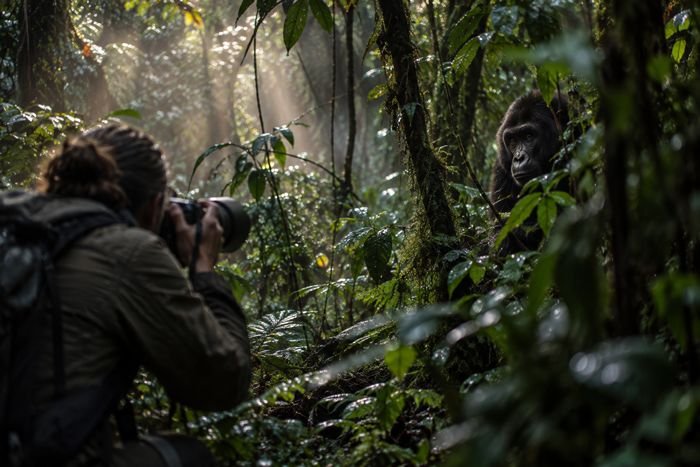
One particularly unforgettable itinerary pairs Katavi’s classic savannah wildlife with chimpanzee trekking in Mahale along the shores of Lake Tanganyika.
This combination showcases two of Tanzania’s most extraordinary wilderness experiences.
Practical travel tips
Before visiting:
- Book flights well in advance.
- Pack neutral-colored clothing.
- Bring binoculars.
- Carry extra camera batteries.
- Expect limited mobile phone coverage.
- Allow several days to fully appreciate the park.
Katavi rewards slow travel rather than rushed itineraries.
Why Katavi deserves more recognition
Katavi represents a type of safari that’s becoming increasingly rare.
Instead of sharing sightings with multiple vehicles, you’ll often experience wildlife in near silence.
Instead of crowded lodges, you’ll stay in intimate camps surrounded by untouched wilderness.
For travelers seeking authenticity over popularity, Katavi delivers one of Africa’s most rewarding safari experiences.
Conclusion
Katavi National Park is one of Africa’s last great wilderness destinations. Its immense buffalo herds, crowded hippo pools, thriving predator populations, and extraordinary sense of isolation create a safari experience that feels both timeless and deeply immersive.
While reaching Katavi requires a little more planning than Tanzania’s better-known parks, the reward is an authentic safari with few crowds and unforgettable wildlife encounters. For experienced safari travelers—or anyone seeking a truly off-the-beaten-path adventure—Katavi may be the ultimate destination.
For more Tanzania safari guides, hidden gems, and travel planning advice, continue exploring the WhySafari blog.
FAQs
Katavi is located in western Tanzania, not far from Lake Tanganyika, and forms part of the country’s remote Western Safari Circuit.
The park is renowned for enormous buffalo herds, crowded hippo pools during the dry season, excellent predator sightings, and extremely low visitor numbers.
The dry season from June to October generally offers the best wildlife viewing as animals gather around permanent water sources.
No. Katavi is one of Tanzania’s least-visited national parks, offering an exceptionally peaceful safari experience.
You can expect excellent sightings of lions, elephants, buffalo, and leopards. Rhinos are not part of the park’s wildlife population, so Katavi is not considered a traditional Big Five destination.
Most visitors arrive by scheduled or charter flights from Arusha, Dar es Salaam, or other safari destinations within Tanzania.
Three to four days is ideal, allowing enough time to experience different habitats and enjoy the park’s remarkable wildlife without rushing.