When travelers plan a safari in Tanzania, destinations like the Serengeti and Ngorongoro Crater often dominate the conversation. Yet in the country’s south lies one of Africa’s largest protected wilderness areas—a place where boat safaris, walking safaris, and classic game drives combine to create an experience unlike anywhere else in East Africa.
Welcome to Nyerere National Park, formerly known as the northern part of the legendary Selous Game Reserve.
Renamed in 2019 in honor of Tanzania’s first president, Julius Nyerere, the park protects an immense and remarkably wild landscape of rivers, lakes, woodlands, and savannah. Despite its extraordinary biodiversity, it receives only a small fraction of the visitors seen in northern Tanzania.
If you’re looking for an authentic safari with fewer crowds and a wider variety of activities, Nyerere National Park deserves a place at the top of your list.
Why was Selous renamed?
Many travelers still refer to the destination as “Selous,” which can be confusing.
Here’s what changed:
- The historic Selous Game Reserve remains one of Africa’s largest protected areas.
- In 2019, its northern tourism zone became Nyerere National Park.
- The remaining southern section continues to be managed as the Selous Game Reserve, primarily for conservation and regulated land use.
Most safari camps and visitor facilities are now located within Nyerere National Park, but you’ll still hear both names used interchangeably by guides and tour operators.
Where is Nyerere National Park?
Nyerere National Park is located in southern Tanzania, approximately 230 kilometers (143 miles) southwest of Dar es Salaam.
Covering more than 30,000 square kilometers (11,500 square miles), it is one of Africa’s largest national parks.
The park forms the heart of Tanzania’s Southern Safari Circuit and offers a striking contrast to the open plains of the Serengeti.
Its diverse landscapes include:
- The Rufiji River
- Palm-lined lakes
- Seasonal wetlands
- Miombo woodlands
- Open grasslands
- Riverine forests
This habitat diversity supports an extraordinary variety of wildlife.
The Rufiji River: The park’s lifeline
Unlike many safari destinations that revolve around open plains, Nyerere’s defining feature is water.
The Rufiji River flows through the park before splitting into a vast network of channels, lagoons, and oxbow lakes.
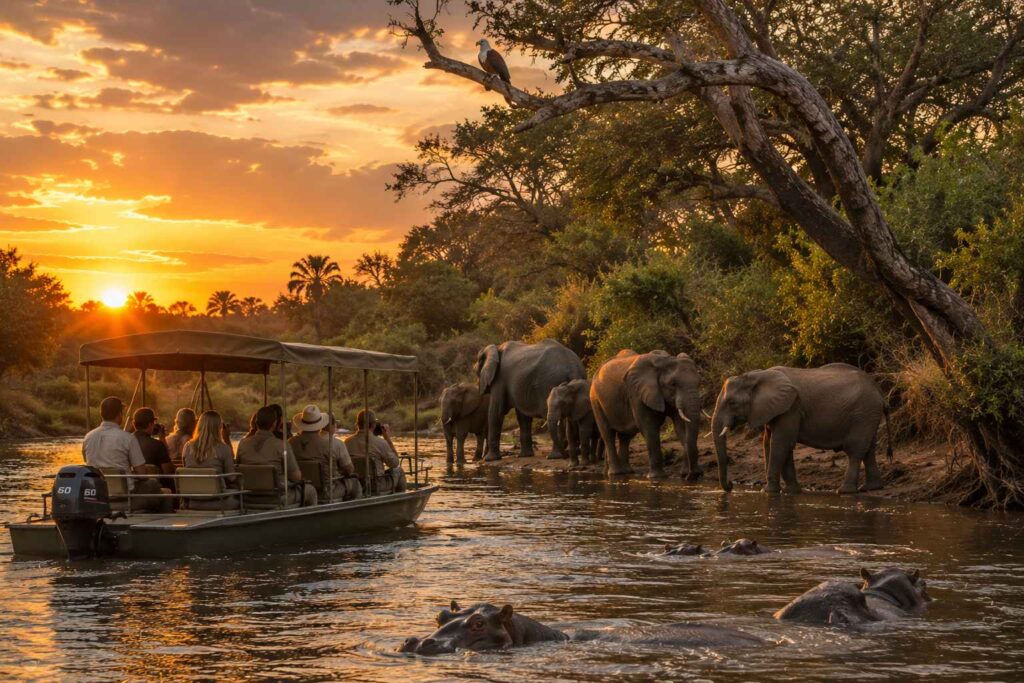
This permanent water source attracts wildlife throughout the year and creates one of Africa’s finest settings for boat safaris.
Watching elephants drink at the river’s edge while hippos grunt nearby is a classic Nyerere experience.
Wildlife in Nyerere National Park
Nyerere supports impressive populations of large mammals.
Visitors regularly encounter:
- Elephants
- Lions
- Leopards
- Buffalo
- Giraffes
- Hippos
- Nile crocodiles
- Zebras
- Greater kudu
- Impalas
- Warthogs
The park is also one of Tanzania’s most important strongholds for the endangered African wild dog, although sightings remain unpredictable.
Because visitor numbers are relatively low, wildlife encounters often feel remarkably private.
One of the best places for African wild dogs
For many safari enthusiasts, African wild dogs are among the most exciting animals to see.
These intelligent, highly social predators have disappeared from much of their historical range, but Nyerere continues to support one of Africa’s healthiest populations.
Although no sightings can be guaranteed, guests staying several days have a realistic chance of encountering a pack, particularly during the dry season.
Watching wild dogs communicate and hunt cooperatively is an unforgettable wildlife experience.
Boat safaris: A unique perspective
One of Nyerere’s biggest attractions is the opportunity to explore by boat.
Unlike most national parks in East Africa, guided boat safaris are a regular part of many itineraries.
From the water, you may see:
- Hippos
- Crocodiles
- Elephants
- Waterbirds
- Buffalo
- Monitor lizards
Boat safaris also provide exceptional photography opportunities, especially during sunrise and sunset when the Rufiji River reflects the changing colors of the sky.
For many visitors, this becomes the highlight of the entire trip.
Walking safaris
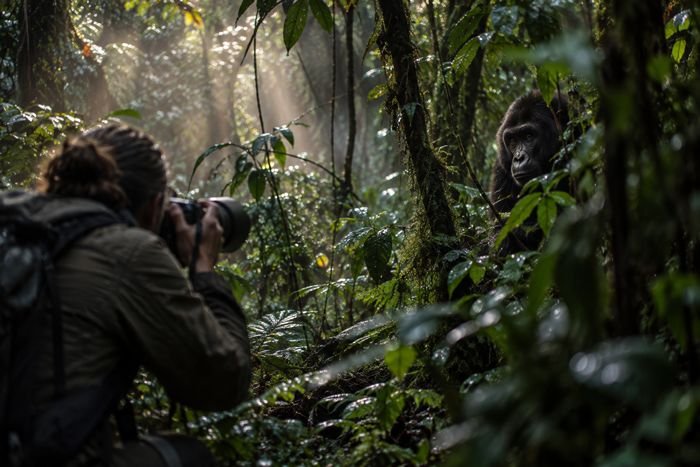
Nyerere is also one of Tanzania’s premier walking safari destinations.
Accompanied by armed professional guides, guests can experience the bush at a much slower pace.
Instead of focusing only on large mammals, walks reveal:
- Animal tracks
- Birdlife
- Insects
- Plants
- Smaller mammals
- Ecological relationships
Walking safaris offer a completely different appreciation of the African wilderness.
Exceptional birdwatching
Bird enthusiasts will find Nyerere particularly rewarding.
More than 440 bird species have been recorded, including:
- African fish eagles
- Kingfishers
- Bee-eaters
- Herons
- Storks
- Pelicans
- Hornbills
- Saddle-billed storks
The combination of rivers, wetlands, and woodland creates excellent year-round birdwatching.
When is the best time to visit?
Nyerere is a year-round destination, but each season offers different advantages.
Dry season (June to October)
This is the most popular time to visit.
Benefits include:
- Easier wildlife viewing
- Animals concentrated near water
- Comfortable temperatures
- Excellent game drives
- Productive boat safaris
Green season (November to May)
Rainfall transforms the landscape into a lush wilderness.
Advantages include:
- Beautiful scenery
- Migratory birds
- Fewer visitors
- Excellent photography
- Lower accommodation rates at some camps
Some remote roads may become difficult to access after heavy rains, and a few seasonal camps close during the wettest months.
Accommodation
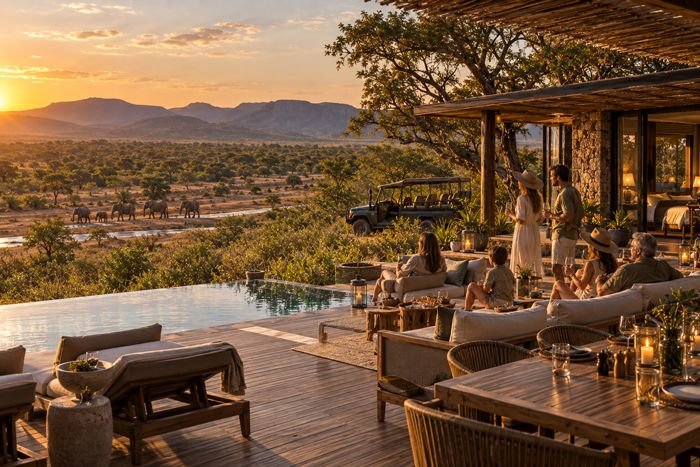
Nyerere offers a range of safari camps that emphasize comfort while preserving the wilderness atmosphere.
Options include:
- Luxury tented camps
- Boutique safari lodges
- Riverside camps
- Intimate bush camps
Many accommodations overlook the Rufiji River, allowing guests to observe wildlife without leaving camp.
Compared with northern Tanzania, properties tend to be smaller and more exclusive.
Who should visit Nyerere?
Nyerere is perfect for travelers who:
- Want fewer crowds.
- Enjoy diverse safari activities.
- Love photography.
- Appreciate rivers and wetlands.
- Have already visited the Serengeti.
- Prefer immersive wilderness experiences.
It’s also an excellent destination for honeymooners seeking privacy and luxury.
Combining Nyerere with other destinations
Many visitors combine Nyerere with:
- Ruaha National Park
- Zanzibar
- Dar es Salaam
- Mikumi National Park
A safari in Nyerere followed by several days on Zanzibar’s beaches is one of Tanzania’s most popular southern itineraries.
Why choose Nyerere over northern Tanzania?
The answer depends on your travel style.
Choose Nyerere if you value:
- Boat safaris
- Walking safaris
- Fewer safari vehicles
- Diverse landscapes
- A stronger sense of wilderness
If witnessing the Great Migration is your top priority, the Serengeti remains the better choice. But if you’re looking for a quieter safari with more varied activities, Nyerere offers an experience that’s every bit as memorable.
Conclusion
Nyerere National Park is one of Tanzania’s most rewarding safari destinations, offering a refreshing alternative to the country’s better-known northern parks. Its combination of classic game drives, peaceful boat safaris on the Rufiji River, guided bush walks, and abundant wildlife creates a safari experience that feels both diverse and deeply immersive.
For travelers seeking authentic wilderness, fewer crowds, and the chance to experience Tanzania from a different perspective, Nyerere is an exceptional choice. Whether you’re watching elephants from a riverboat or tracking wildlife on foot, you’ll quickly understand why this remarkable park has become one of Africa’s hidden safari treasures.
For more Tanzania safari guides, destination comparisons, and travel inspiration, continue exploring the WhySafari blog.
FAQs
Partly. Nyerere National Park was created from the northern tourism section of the former Selous Game Reserve in 2019, while the remaining southern area continues as the Selous Game Reserve.
The park is known for boat safaris, walking safaris, the Rufiji River, large elephant populations, lions, hippos, crocodiles, and endangered African wild dogs.
Yes. Guided boat safaris are one of the park’s signature experiences and provide a unique way to observe wildlife along the Rufiji River.
The dry season from June to October generally offers the best wildlife viewing, while the green season is excellent for birdwatching and photography.
Yes. It’s ideal for travelers seeking a quieter, more varied safari experience, although those focused on the Great Migration may prefer the Serengeti.
Three to four days is ideal, allowing time for game drives, a boat safari, and at least one guided walking safari.
Absolutely. This is one of Tanzania’s most popular safari-and-beach combinations, thanks to convenient domestic flights.