When most visitors think about a safari in Kruger National Park, they picture lions, elephants, or perhaps a spectacular leopard sighting. Yet behind every unforgettable wildlife encounter is a dedicated team of people working tirelessly to protect one of Africa’s greatest conservation areas.
Among the most important of these are Kruger’s rangers.
Far more than guides or law enforcement officers, rangers are conservation professionals, wildlife guardians, educators, emergency responders, and ambassadors for South Africa’s natural heritage. Their work often takes place behind the scenes, but it has a direct impact on every visitor’s safari experience.
Understanding what rangers do offers a deeper appreciation for the remarkable effort required to keep Kruger thriving—for both wildlife and people.
Who are Kruger’s rangers?
Kruger National Park employs different types of rangers and conservation staff, each with specific responsibilities.
Depending on their role, rangers may focus on:
- Wildlife protection
- Visitor safety
- Environmental management
- Ecological monitoring
- Anti-poaching operations
- Fire management
- Community outreach
- Scientific research support
Many spend years developing specialist knowledge of animal behavior, ecosystems, navigation, and conservation practices.
Although visitors may only meet a few during their safari, hundreds of dedicated professionals work across the park every day.
Protecting wildlife
One of the most important responsibilities of Kruger’s ranger teams is protecting wildlife.
This includes monitoring populations of elephants, rhinos, lions, leopards, buffalo, and countless other species while responding to threats that could affect the park’s biodiversity.
Rangers help:
- Monitor animal movements.
- Report injured wildlife.
- Protect sensitive habitats.
- Investigate unusual animal behavior.
- Support veterinary interventions when necessary.
Much of this work happens quietly, away from tourist routes, yet it is essential for maintaining healthy ecosystems.
The fight against poaching
Kruger has become internationally known for its efforts to combat wildlife crime, particularly rhino poaching.
Specialized ranger units work alongside conservation authorities, tracking teams, aviation support, canine units, and law enforcement agencies to help protect endangered species.
While anti-poaching operations are only one part of a ranger’s job, they represent an important commitment to preserving wildlife for future generations.
Visitors rarely witness these activities directly, but responsible tourism helps support the conservation work taking place behind the scenes.
Helping visitors stay safe
Rangers also play an important role in visitor safety.
They help enforce park regulations that protect both people and animals.
Responsibilities include:
- Responding to emergencies.
- Monitoring road conditions.
- Assisting stranded motorists.
- Providing safety information.
- Managing incidents involving wildlife.
- Supporting search and rescue when required.
Their presence allows visitors to enjoy genuine wilderness while minimizing unnecessary risks.
Managing the landscape
Kruger is not a static environment.
Rangers and ecological teams constantly monitor natural processes that influence the park’s health.
This includes:
- Seasonal water availability.
- Controlled burning programs.
- Invasive plant management.
- Habitat restoration.
- River health.
- Vegetation changes.
Maintaining ecological balance requires careful observation and long-term planning rather than constant intervention.
In many cases, allowing natural processes to unfold is itself an important conservation decision.
Supporting scientific research
Kruger is one of Africa’s leading conservation research landscapes.
Scientists regularly study wildlife populations, climate impacts, disease ecology, migration patterns, and biodiversity throughout the park.
Rangers frequently assist researchers by:
- Collecting field observations.
- Monitoring wildlife.
- Recording animal sightings.
- Helping access remote locations.
- Sharing long-term ecological knowledge.
Their practical experience often complements scientific research in valuable ways.
Fire management
Fire is a natural part of many African ecosystems.
Rather than eliminating fire entirely, Kruger carefully manages it to maintain healthy grasslands and biodiversity.
Rangers help monitor natural fires while participating in controlled burns when ecological conditions make them beneficial.
These carefully planned operations reduce excessive fuel buildup, encourage new plant growth, and support habitat diversity for numerous wildlife species.
Conservation education
Many visitors meet rangers during educational talks, guided walks, or interpretive programs.
These interactions help explain:
- Animal behavior.
- Ecosystem dynamics.
- Conservation challenges.
- Responsible safari etiquette.
- The importance of protected areas.
Learning directly from conservation professionals often transforms a safari from simple wildlife viewing into a richer educational experience.
Understanding why conservation matters makes every animal sighting more meaningful.
Rangers and safari guides: What’s the difference?
Although visitors sometimes use the terms interchangeably, rangers and safari guides often perform different roles.
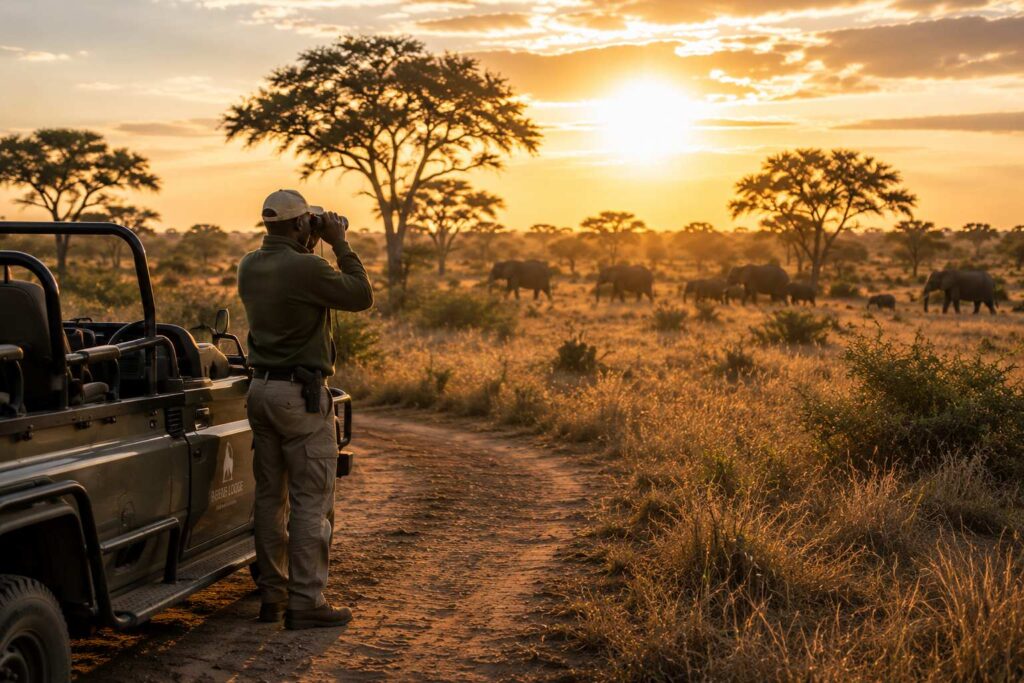
Professional safari guides focus primarily on interpreting wildlife for guests through game drives and walking safaris.
Park rangers generally have broader conservation responsibilities that extend well beyond tourism.
In private reserves, some guides are also qualified field rangers, combining visitor experiences with conservation expertise.
Regardless of title, both contribute significantly to visitor safety and environmental stewardship.
The challenges of being a ranger
Working in Kruger is deeply rewarding, but it can also be demanding.
Rangers often work:
- Long hours.
- In remote locations.
- During extreme weather.
- Around dangerous wildlife.
- Under physically demanding conditions.
Their work requires patience, resilience, excellent decision-making, and a lifelong commitment to conservation.
Many describe the opportunity to protect one of Africa’s most iconic landscapes as a privilege despite these challenges.
How rangers enhance your safari
Even if you never speak directly with a ranger, their work shapes nearly every part of your visit.
Because of their efforts, visitors enjoy:
- Healthy wildlife populations.
- Safe roads.
- Well-managed habitats.
- Protected ecosystems.
- Conservation-focused tourism.
- Memorable wildlife encounters.
Their behind-the-scenes work creates the conditions that make exceptional safaris possible.
How visitors can support their work
Every safari guest can contribute to conservation by following park regulations and respecting wildlife.
Simple actions make a difference:
- Stay inside your vehicle where required.
- Never feed animals.
- Respect speed limits.
- Avoid littering.
- Follow ranger instructions.
- Support responsible tourism businesses.
These small decisions help reduce pressure on both wildlife and conservation staff.
Why Kruger’s rangers matter
Protected areas do not succeed through beautiful landscapes alone.
They depend on skilled, dedicated people committed to safeguarding wildlife while balancing conservation, tourism, and local communities.
Kruger’s rangers represent that commitment every day.
Their work ensures that future generations will continue experiencing the same extraordinary wilderness that inspires millions of visitors today.
Conclusion
Kruger’s rangers are much more than park staff—they are the guardians of one of Africa’s most important conservation landscapes. From protecting endangered wildlife and managing ecosystems to supporting scientific research and helping visitors stay safe, their work touches every aspect of the safari experience.
The next time you watch elephants crossing the road, hear lions roaring after sunset, or enjoy the peace of Kruger’s wilderness, remember that dedicated professionals are working every day to keep this remarkable ecosystem healthy and protected.
For more Kruger travel guides, conservation stories, and safari planning advice, continue exploring the WhySafari blog.
FAQs
Their responsibilities include wildlife protection, visitor safety, ecological monitoring, anti-poaching support, fire management, conservation education, and assisting scientific research.
Not always. Safari guides focus mainly on guest experiences, while park rangers have broader conservation and management responsibilities. Some professionals perform both roles, particularly in private reserves.
Yes. Specialized ranger teams work alongside conservation authorities and law enforcement agencies to help combat poaching and protect endangered species.
Visitors may encounter rangers at camps, information centers, educational programs, or during guided activities, although much of their work takes place behind the scenes.
By protecting wildlife, maintaining habitats, supporting visitor safety, and managing conservation programs, they help ensure high-quality safari experiences for everyone.
Some ranger units, particularly those involved in anti-poaching or law enforcement operations, may be armed as part of their official duties. Other conservation staff perform different roles that do not require firearms.
Respect park regulations, practice responsible wildlife viewing, avoid littering, support conservation-focused tourism, and follow all safety guidance during your visit.