When most travelers think of a safari in Tanzania, the Serengeti and Ngorongoro Crater usually top the list. While these iconic destinations deserve their reputation, they also attract the majority of the country’s safari visitors.
Far to the south lies a very different wilderness—one that remains remarkably uncrowded despite offering some of Africa’s finest wildlife viewing.
Ruaha National Park is Tanzania’s largest national park and one of its least-visited. With vast baobab-studded landscapes, thriving predator populations, enormous elephant herds, and an authentic sense of isolation, Ruaha delivers the kind of safari many experienced travelers dream about.
If you’re looking to escape the crowds without sacrificing wildlife, Ruaha may be Tanzania’s best-kept safari secret.
Where is Ruaha National Park?
Ruaha National Park lies in central-southern Tanzania and forms the heart of the country’s Southern Safari Circuit.
Covering more than 20,000 square kilometers (7,700 square miles), it is larger than the Serengeti National Park and protects an immense wilderness connected to several surrounding conservation areas.
Despite its size, Ruaha receives only a fraction of the visitors who travel to northern Tanzania each year.
That means more space, quieter game drives, and a safari experience that feels genuinely wild.
A landscape unlike northern Tanzania
Ruaha’s scenery is dramatically different from the open plains of the Serengeti.
The park is characterized by:
- Ancient baobab trees
- Rocky escarpments
- Rolling hills
- Open savannah
- Miombo woodlands
- The Great Ruaha River
The river is the park’s lifeline, attracting wildlife throughout the dry season and creating spectacular opportunities for game viewing.
The combination of rivers, woodland, and grassland supports an exceptional diversity of species.
One of Africa’s best places to see predators
Ruaha has earned a reputation as one of Africa’s premier predator destinations.
Its healthy prey populations support impressive numbers of:
- Lions
- Leopards
- Cheetahs
- Spotted hyenas
- African wild dogs
The park is particularly famous for its large lion prides, some of which are among the biggest recorded in Africa.
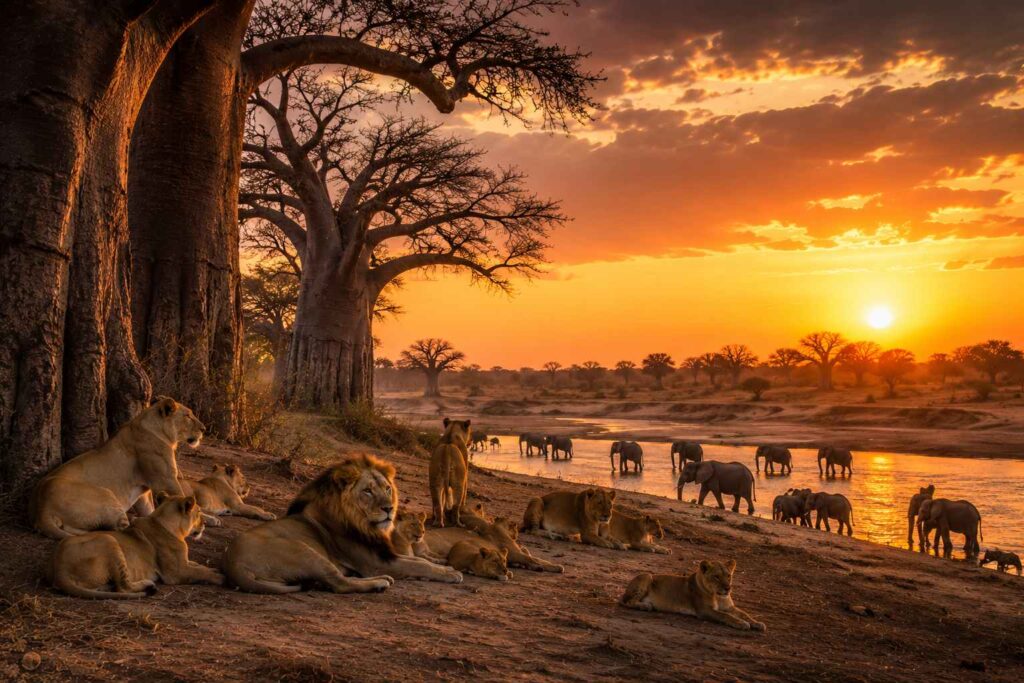
Watching several lions resting beneath a giant baobab or following a pride as it patrols the riverbanks is a classic Ruaha experience.
Exceptional African wild dog sightings
One of Ruaha’s greatest wildlife attractions is the African wild dog.
These highly social and endangered predators are difficult to find in many safari destinations, but Ruaha supports one of East Africa’s most important remaining populations.
Although sightings can never be guaranteed, visitors have an excellent chance of encountering packs, particularly during the dry season.
Watching wild dogs cooperate during a hunt is one of Africa’s most thrilling wildlife spectacles.
Huge elephant herds
Ruaha is also renowned for its elephants.
The park supports one of Tanzania’s largest elephant populations, and it’s not unusual to see family groups gathering along the Great Ruaha River during the dry months.
These elephants play an important ecological role by:
- Opening woodland habitats
- Dispersing seeds
- Creating pathways used by other wildlife
Observing their complex family interactions is often one of the highlights of a Ruaha safari.
Remarkable birdlife
Birdwatchers will find plenty to enjoy in Ruaha.
More than 570 bird species have been recorded, thanks to the park’s diverse habitats.
Highlights include:
- Fish eagles
- Hornbills
- Bee-eaters
- Rollers
- Kingfishers
- Vultures
- Eagles
- Storks
The transition between eastern and southern African ecosystems creates an especially rich mix of bird species.
Fewer vehicles, more wilderness
Perhaps Ruaha’s greatest appeal isn’t the wildlife itself—it’s the feeling of having the wilderness almost to yourself.
Unlike some of East Africa’s busier parks, game drives here often pass without encountering another vehicle for extended periods.
This creates:
- Peaceful wildlife viewing
- Better photography opportunities
- A stronger sense of exploration
- More intimate safari experiences
For repeat safari travelers, this solitude is often Ruaha’s biggest attraction.
The Great Ruaha River
The Great Ruaha River shapes much of the park’s wildlife activity.
During the dry season, it becomes a magnet for animals searching for water.
Visitors frequently see:
- Elephants drinking
- Hippos in pools
- Crocodiles basking
- Lions patrolling nearby
- Buffalo gathering along the banks
Because so much wildlife concentrates around the river, game drives during this period can be exceptionally productive.
When is the best time to visit?
Ruaha is rewarding throughout the year, but the seasons offer different experiences.
Dry season (June to October)
This is generally considered the best time for wildlife viewing.
Advantages include:
- Animals concentrated near water
- Excellent predator sightings
- Comfortable game viewing
- Easier wildlife photography
Green season (November to May)
The rains transform the landscape.
Visitors enjoy:
- Lush scenery
- Migratory birds
- Dramatic skies
- Fewer visitors
- Young animals
Some roads may become more challenging after heavy rainfall, but the park remains beautiful.
Accommodation in Ruaha
Ruaha offers a range of carefully managed safari accommodation.
Options include:
- Luxury safari lodges
- Tented camps
- Boutique bush camps
- Mid-range safari camps
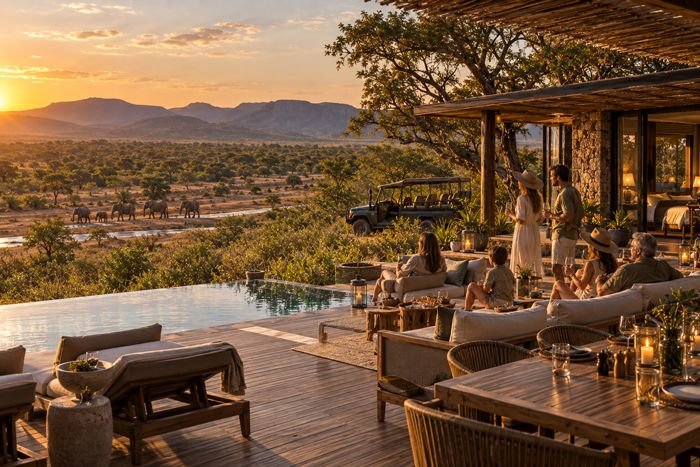
Many properties overlook the Great Ruaha River, allowing guests to watch wildlife directly from camp.
Compared with more heavily visited destinations, accommodation remains relatively limited, helping preserve the park’s exclusive atmosphere.
Who should visit Ruaha?
Ruaha is particularly well suited to travelers who:
- Have already visited the Serengeti
- Want fewer crowds
- Love predator sightings
- Enjoy birdwatching
- Appreciate remote wilderness
- Prefer authentic safari experiences
It’s also an excellent choice for photographers seeking uncluttered wildlife sightings and dramatic landscapes.
Can you combine Ruaha with other parks?
Absolutely.
Many travelers combine Ruaha with:
- Nyerere National Park
- Mikumi National Park
- Zanzibar
- The Serengeti (via domestic flights)
A Southern Circuit safari offers a refreshing alternative to Tanzania’s more traditional northern itinerary.
Combining Ruaha with Zanzibar is especially popular, pairing adventurous wildlife experiences with relaxing Indian Ocean beaches.
Why Ruaha deserves more attention
Ruaha has everything many safari travelers are searching for:
- Outstanding wildlife
- Excellent predator viewing
- Beautiful landscapes
- Comfortable camps
- Authentic guiding
- Very few crowds
Its relative remoteness has helped preserve the feeling of genuine exploration that has disappeared from some better-known safari destinations.
For many visitors, that’s exactly what makes Ruaha so unforgettable.
Conclusion
Ruaha National Park offers one of Tanzania’s most rewarding safari experiences. With its immense wilderness, thriving populations of lions, elephants, African wild dogs, and countless other species, it rivals Africa’s most famous parks while remaining refreshingly uncrowded.
For travelers seeking an authentic safari away from the busiest tourist routes, Ruaha delivers spectacular wildlife, dramatic landscapes, and a true sense of adventure. It may not have the international fame of the Serengeti, but that’s precisely why many experienced safari enthusiasts consider it one of Africa’s greatest hidden gems.
For more Tanzania safari guides, destination comparisons, and travel inspiration, continue exploring the WhySafari blog.
FAQs
Ruaha is located in central-southern Tanzania and forms the centerpiece of the country’s Southern Safari Circuit.
The park is especially known for its large lion prides, African wild dogs, elephants, leopards, cheetahs, and impressive birdlife.
Yes. Ruaha receives significantly fewer visitors, offering a quieter and more exclusive safari experience.
The dry season from June to October generally provides the best wildlife viewing as animals gather around the Great Ruaha River.
Yes, although many visitors choose it after experiencing northern Tanzania. Those seeking fewer crowds often find it an excellent first safari destination.
Absolutely. Domestic flights make it easy to combine a safari in Ruaha with a beach holiday on Zanzibar.
Three to five days is ideal, allowing enough time to explore different habitats and maximize wildlife viewing opportunities.