Few wildlife sightings are as memorable as encountering a rhino in the wild. Powerful, prehistoric-looking, and increasingly rare across Africa, both black and white rhinos have become conservation icons. While seeing one is never guaranteed on safari, Lake Nakuru National Park offers some of the best opportunities in Kenya—and indeed East Africa—to observe these remarkable animals.
Unlike traditional rhino tracking on foot offered in a handful of private conservancies, “rhino tracking” in Lake Nakuru refers to searching for rhinos during guided or self-drive game drives with the help of experienced guides, park rangers, and well-established wildlife monitoring. Thanks to decades of conservation work and the park’s protected status, visitors enjoy consistently excellent rhino sightings.
If rhinos are high on your safari wish list, Lake Nakuru deserves a place near the top of your itinerary.
Why Lake Nakuru is famous for rhinos
Lake Nakuru National Park is one of Kenya’s greatest conservation success stories.
Originally created to protect its unique ecosystem and birdlife, the park has also become one of the country’s most important rhino sanctuaries.
Today, it supports healthy populations of both:
- White rhinos
- Black rhinos
This makes Lake Nakuru one of the few places in Africa where visitors have realistic chances of seeing both species during a single safari.
The park’s fenced boundaries and dedicated conservation efforts help provide a safer environment for these endangered animals.
Black rhinos vs white rhinos
Many first-time visitors are surprised to learn that the names “black” and “white” rhino do not refer to color.
Both species are gray, but they differ in appearance and behavior.
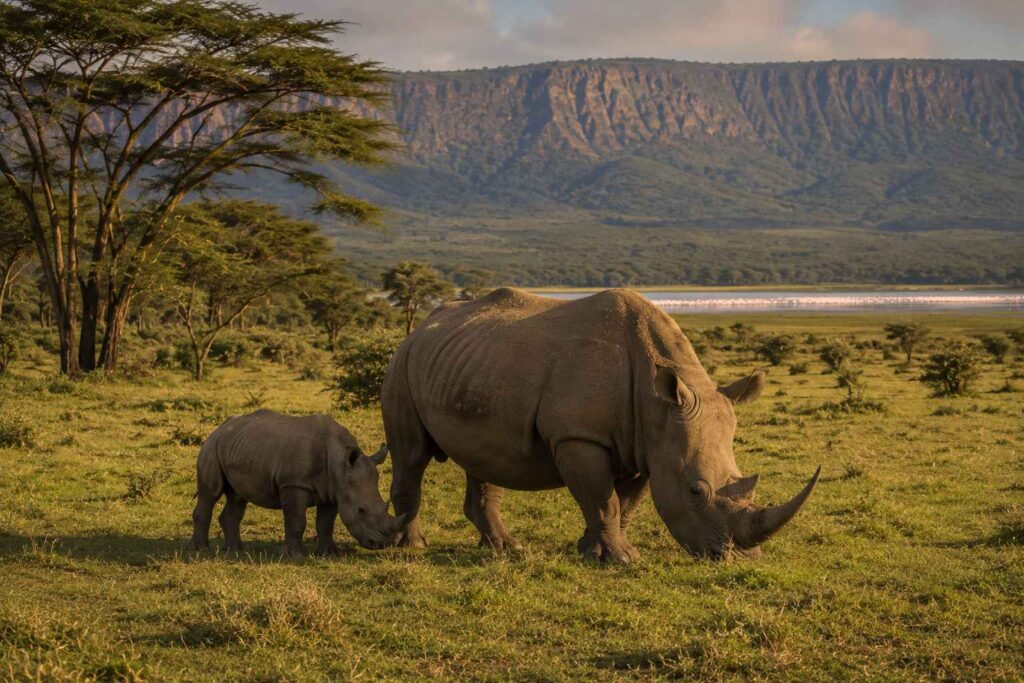
White rhinos
White rhinos are:
- Larger
- More social
- Broad-lipped grazers
- Usually found feeding on grasslands
They often tolerate vehicles well and can sometimes be seen in small groups.
Black rhinos
Black rhinos are:
- Smaller
- Solitary
- Hook-lipped browsers
- More likely to feed on shrubs and bushes
They tend to be more elusive and are often found in denser vegetation.
Spotting both species in one day is one of Lake Nakuru’s greatest attractions.
Why sightings are so reliable
Several factors make rhino viewing particularly rewarding in Lake Nakuru.
These include:
- A protected sanctuary environment
- Active wildlife monitoring
- Experienced park rangers
- Healthy breeding populations
- A relatively compact park
Because the park covers a manageable area compared with many larger safari destinations, guides can efficiently explore different rhino habitats during a game drive.
While sightings are never guaranteed, success rates are among the highest in Kenya.
The role of conservation
Lake Nakuru’s rhinos exist today thanks to decades of dedicated conservation.
Park authorities and conservation partners work continuously to protect the animals through:
- Anti-poaching patrols
- Scientific monitoring
- Habitat management
- Veterinary support
- Population management
The park has played an important role in helping Kenya rebuild its rhino numbers after severe declines caused by poaching during the twentieth century.
Every rhino sighting is therefore also a reminder of the value of long-term conservation efforts.
Where are rhinos usually found?
Rhinos move throughout the park, but they are often seen in:
- Open grasslands
- Woodland edges
- Acacia scrub
- Areas close to water sources
White rhinos usually prefer more open terrain where they can graze.
Black rhinos often remain closer to dense vegetation that provides food and cover.
Experienced guides understand these habitat preferences and adjust their routes accordingly.
The best time to look for rhinos
Rhinos may be active throughout the day, but the most productive game drives are usually:
- Early morning
- Late afternoon
During cooler hours, both species spend more time feeding and moving through the landscape.
As temperatures rise, they often rest in shade or dense vegetation.
The dry season generally improves visibility as grasses become shorter and wildlife gathers around reliable water sources.
What makes the experience special?
Unlike searching for elusive predators over vast distances, rhino viewing in Lake Nakuru often feels more intimate.
Visitors frequently have opportunities to observe natural behaviors such as:
- Grazing
- Browsing
- Mothers with calves
- Territorial interactions
- Mud wallowing
Because rhinos move at their own pace, sightings often last longer than encounters with more mobile predators.
This provides excellent opportunities to appreciate their size, behavior, and surprisingly calm demeanor.
Photography tips
Lake Nakuru offers outstanding conditions for rhino photography.
To improve your images:
- Visit during early morning or late afternoon.
- Focus on behavior rather than close-ups alone.
- Include the surrounding landscape.
- Be patient.
- Listen to your guide’s positioning advice.
Photographs showing rhinos against the backdrop of acacia woodland or the Rift Valley escarpment often create particularly memorable compositions.
Responsible rhino viewing
Rhinos remain wild animals and deserve respectful viewing.
Visitors should always:
- Stay inside the vehicle.
- Keep noise to a minimum.
- Avoid sudden movements.
- Never pressure guides to approach too closely.
- Follow park regulations.
Responsible tourism helps ensure that wildlife experiences remain sustainable while minimizing disturbance to these endangered animals.
Can you see the rest of the Big Five?
Lake Nakuru offers excellent opportunities to see:
- Rhinos
- Lions
- Leopards
- Buffalo
Elephants are not found within the park, meaning Lake Nakuru is not a complete Big Five destination.
However, many travelers combine it with parks such as Amboseli or the Masai Mara to enjoy a broader safari experience.
Is Lake Nakuru the best rhino destination in Kenya?
Many safari experts believe it ranks among the very best.
The combination of:
- Both rhino species
- Consistently good sightings
- Beautiful scenery
- Excellent accessibility
- Strong conservation history
makes Lake Nakuru one of Kenya’s premier destinations for anyone hoping to see rhinos in the wild.
Conclusion
Rhino tracking in Lake Nakuru is about far more than simply adding another species to your safari checklist. It’s an opportunity to observe two of Africa’s most endangered mammals in one of Kenya’s greatest conservation success stories. Whether you’re watching a white rhino grazing peacefully across the grasslands or catching a glimpse of a shy black rhino emerging from the acacia scrub, each sighting reflects decades of dedicated wildlife protection.
For travelers passionate about conservation, photography, or simply unforgettable wildlife encounters, Lake Nakuru remains one of the finest places in Africa to experience rhinos in their natural habitat.
For more Kenya safari guides, wildlife articles, and travel planning tips, continue exploring the WhySafari blog.
FAQs
Yes. Lake Nakuru is one of the few parks in Kenya where visitors have an excellent chance of seeing both species during the same safari.
No. In Lake Nakuru, rhinos are typically located during guided or self-drive game drives rather than through on-foot tracking experiences.
The park’s protected sanctuary status, active wildlife management, and relatively compact size contribute to consistently good rhino viewing.
Early morning and late afternoon usually offer the best opportunities, when rhinos are most active.
Rhinos are powerful wild animals and should always be observed from the safety of a vehicle while following your guide’s instructions.
Yes. Lake Nakuru is considered one of Kenya’s best destinations for rhino photography thanks to its open habitats and frequent sightings.
Not quite. The park has lions, leopards, buffalo, black rhinos, and white rhinos, but elephants are not found within the park.