Namibia is famous for its towering sand dunes, dramatic coastlines, and exceptional wildlife, but one of its most fascinating regions lies between these iconic destinations. Damaraland is a place of rugged mountains, ancient valleys, prehistoric rock art, and wildlife that has adapted to survive in one of Africa’s harshest environments.
Unlike traditional safari destinations filled with lush plains and permanent rivers, Damaraland offers something entirely different. Here, dry riverbeds become wildlife corridors, granite peaks rise from endless gravel plains, and desert-adapted elephants roam landscapes that seem almost untouched by time.
For travelers seeking scenery as memorable as the wildlife itself, Damaraland is one of Namibia’s most rewarding destinations.
Where is Damaraland?
Damaraland is located in northwestern Namibia, between the Skeleton Coast, Etosha National Park, and the Kaokoveld.
Rather than being a formal national park, it is a vast region made up of communal conservancies, private reserves, and protected wilderness areas.
Its landscapes include:
- Rocky mountains
- Dry river valleys
- Granite outcrops
- Open plains
- Ancient volcanic formations
Because the region is sparsely populated and carefully managed, it offers an authentic sense of wilderness rarely found elsewhere.
What makes Damaraland unique?
Few places in Africa combine geology, archaeology, and wildlife as successfully as Damaraland.
The region is renowned for:
- Desert-adapted elephants
- Ancient San rock engravings
- Dramatic mountain scenery
- Rare desert wildlife
- Exceptional stargazing
- Low visitor numbers
Unlike destinations where game drives dominate every day, Damaraland blends safari experiences with cultural and geological exploration.
Desert-adapted elephants
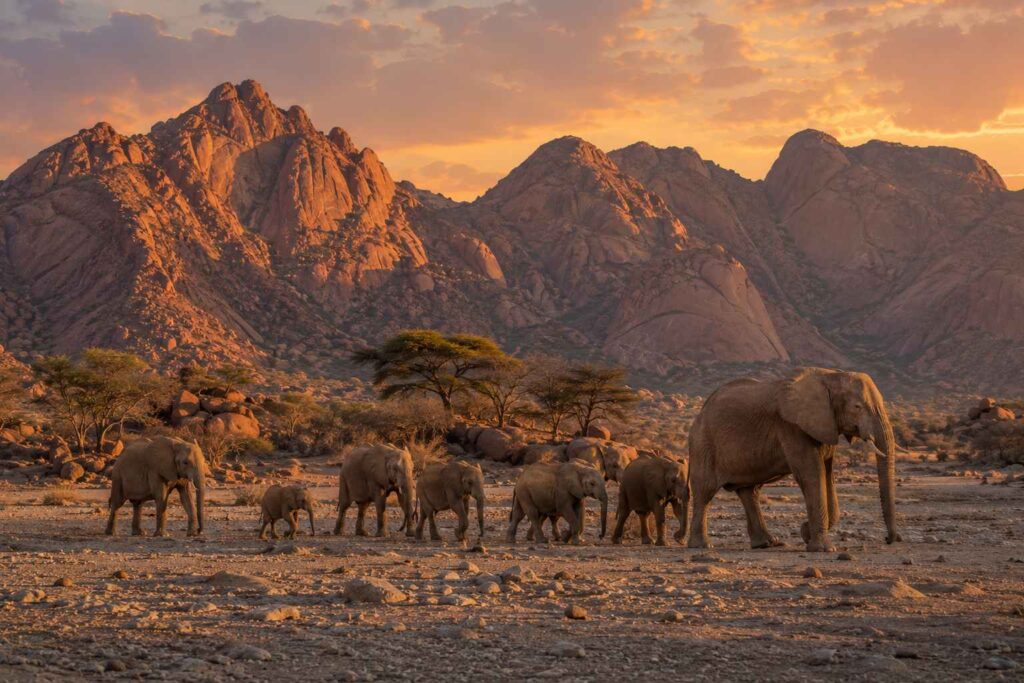
The region’s most famous residents are its desert-adapted elephants.
These are not a separate species but African elephants that have gradually adapted to survive in one of the driest environments on the continent.
Over generations they have learned to:
- Travel long distances between water sources
- Feed on drought-resistant vegetation
- Navigate dry riverbeds
- Conserve energy in extreme heat
Watching these elephants move gracefully through rocky desert landscapes is one of Namibia’s most iconic wildlife experiences.
Other wildlife
Although wildlife densities are lower than in Etosha National Park, Damaraland supports an impressive range of species.
Visitors may encounter:
- Black rhinos
- Giraffes
- Gemsbok (oryx)
- Springbok
- Greater kudu
- Mountain zebras
- Ostriches
- Brown hyenas
- Black-backed jackals
Leopards also inhabit the region, though they remain elusive.
The focus here is quality rather than quantity, with each sighting made even more memorable by the dramatic surroundings.
Tracking black rhinos
Damaraland is one of Namibia’s most important strongholds for the endangered black rhino.
Several conservancies and specialist operators offer guided rhino tracking experiences led by expert trackers.
These carefully managed excursions emphasize:
- Conservation
- Respectful wildlife viewing
- Education
- Minimal disturbance
Because black rhinos remain critically endangered, strict regulations help protect both the animals and their habitat.
Ancient rock art at Twyfelfontein
One of Damaraland’s greatest treasures is Twyfelfontein, a UNESCO World Heritage Site.
This remarkable archaeological area contains thousands of rock engravings created by San hunter-gatherers over thousands of years.
The carvings depict:
- Giraffes
- Elephants
- Rhinos
- Lions
- Human figures
- Geometric symbols
Visiting Twyfelfontein offers a fascinating glimpse into southern Africa’s ancient cultural history.
Remarkable geology
Damaraland’s scenery is shaped by volcanic activity and erosion spanning millions of years.
Notable natural attractions include:
- Brandberg Mountain
- Organ Pipes
- Burnt Mountain
- Granite koppies
- Basalt formations
These geological features make the region just as appealing to landscape enthusiasts as wildlife lovers.
Scenic game drives
Game drives in Damaraland differ from those in traditional safari parks.
Instead of following permanent rivers or grassy plains, guides search along:
- Dry riverbeds
- Rocky valleys
- Open gravel plains
- Acacia-lined watercourses
Wildlife tracking often involves reading footprints and understanding how animals move through this demanding environment.
The experience feels more like exploration than simply searching for animals.
Birdwatching
Birdlife is surprisingly diverse despite the arid climate.
Common species include:
- Verreaux’s eagles
- Ostriches
- Hornbills
- Bee-eaters
- Larks
- Secretary birds
- Pale chanting goshawks
Birdwatching is particularly rewarding near seasonal watercourses.
When is the best time to visit?
Damaraland can be visited year-round.
Dry season (May to October)
Advantages include:
- Cooler temperatures
- Easier wildlife viewing
- Comfortable hiking
- Clear skies
Animals are more likely to concentrate near remaining water sources.
Summer (November to April)
The warmer months bring:
- Occasional rain
- Greener landscapes
- Dramatic cloud formations
- Excellent photography opportunities
Temperatures can become very high during the middle of the day.
Accommodation
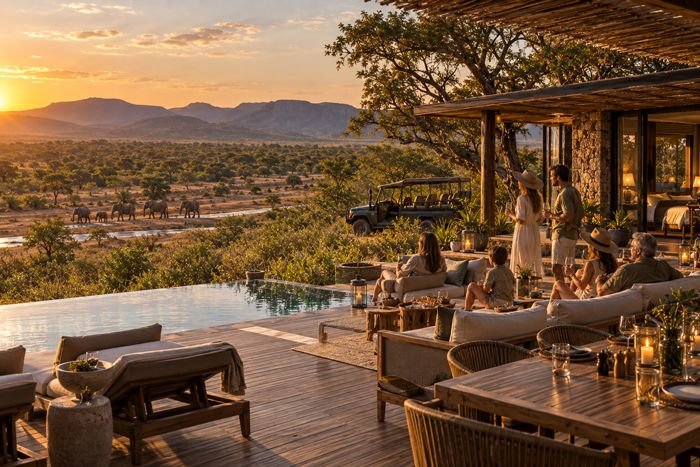
Accommodation in Damaraland emphasizes blending into the landscape.
Options include:
- Luxury eco-lodges
- Boutique safari camps
- Remote tented camps
- Mid-range lodges
Many properties are positioned to maximize views of mountains, valleys, and open desert.
Several also offer excellent opportunities for stargazing thanks to exceptionally dark skies.
Who should visit Damaraland?
Damaraland is ideal for travelers who:
- Love landscapes as much as wildlife.
- Enjoy photography.
- Appreciate geology and archaeology.
- Prefer quieter destinations.
- Have already visited traditional safari parks.
- Want a deeper understanding of Namibia.
It’s particularly rewarding for self-drive visitors exploring Namibia over two or three weeks.
Combining Damaraland with other destinations
Damaraland fits perfectly into a classic Namibia road trip.
Popular combinations include:
- Etosha National Park
- Skeleton Coast
- Swakopmund
- Namib-Naukluft National Park
- Spitzkoppe
Together, these destinations showcase Namibia’s extraordinary diversity of wildlife and landscapes.
Practical travel tips
To make the most of your visit:
- Travel with a high-clearance vehicle if self-driving.
- Carry plenty of water.
- Wear sturdy walking shoes.
- Bring binoculars.
- Pack layers for cool mornings and evenings.
- Spend at least two nights in the region.
The slower pace of Damaraland rewards travelers who allow time to appreciate both its scenery and wildlife.
Conclusion
Damaraland is one of Namibia’s most distinctive safari destinations, offering a remarkable blend of desert wildlife, ancient cultural heritage, and spectacular geological landscapes. From tracking desert-adapted elephants through dry riverbeds to exploring the prehistoric rock engravings of Twyfelfontein, every day brings experiences that differ from a traditional African safari.
If you’re looking beyond the classic game-viewing destinations and want to discover a wilder, quieter side of Namibia, Damaraland is an unforgettable addition to any itinerary. Its landscapes are as captivating as its wildlife, making it one of southern Africa’s true hidden gems.
For more Namibia travel guides, safari planning advice, and destination inspiration, continue exploring the WhySafari blog.
FAQs
Damaraland is best known for its desert-adapted elephants, black rhinos, dramatic landscapes, and the UNESCO-listed rock engravings at Twyfelfontein.
Yes. The region is one of the best places in Africa to observe desert-adapted elephants in their natural environment.
No. Damaraland is a geographical region made up of communal conservancies, private reserves, and protected wilderness rather than a single national park.
The cooler dry season from May to October generally offers the most comfortable weather and the best wildlife viewing.
Absolutely. Damaraland is a popular stop on Namibia self-drive itineraries, although some roads require a high-clearance vehicle.
Yes. The combination of rugged mountains, desert wildlife, dramatic light, and ancient geological formations makes it one of Namibia’s top photography destinations.
Two to three days is ideal, allowing enough time to explore Twyfelfontein, search for desert wildlife, and enjoy the region’s spectacular scenery.