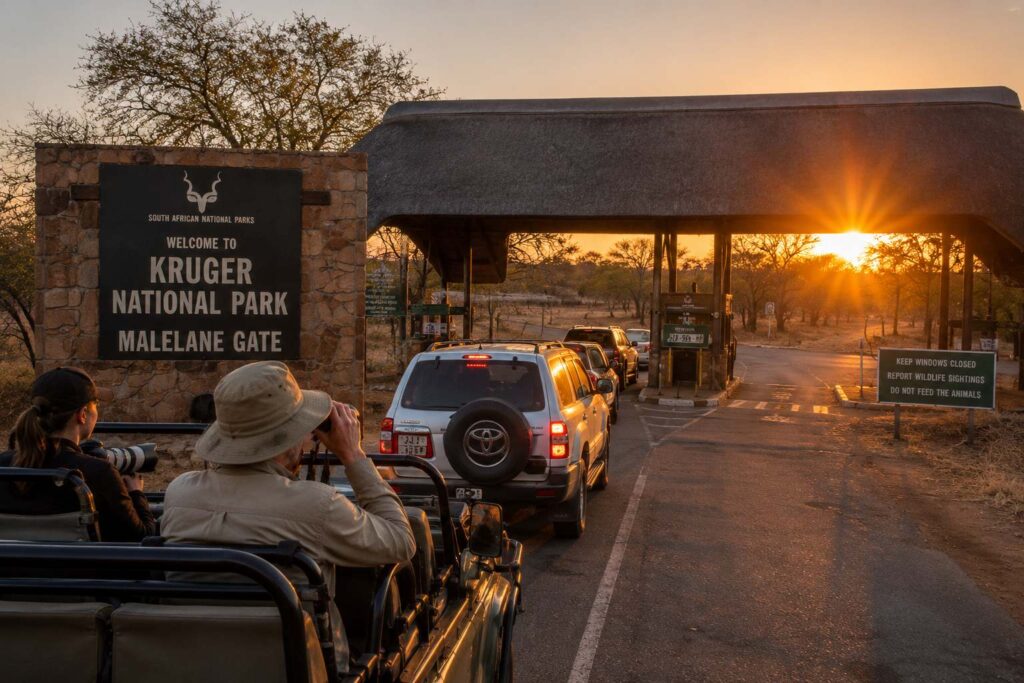
Few things are more frustrating than arriving at Kruger National Park before sunrise—only to find a long line of vehicles waiting at the entrance gate.
During school holidays, public holidays, and the dry winter safari season, queues at some of Kruger’s busiest gates can become surprisingly long. While they rarely ruin a safari, they can delay your morning game drive and reduce valuable wildlife viewing time during the most active hours of the day.
Fortunately, with a little planning, it’s often possible to minimize waiting times and enjoy a much smoother start to your safari.
Here’s how to avoid long queues at Kruger’s entrance gates during peak travel periods.
Why do queues happen?
Kruger National Park is one of Africa’s most popular safari destinations.
Thousands of visitors enter the park every day during busy periods, particularly through the southern gates closest to Johannesburg.
Several factors contribute to delays:
- School holidays
- Long weekends
- Public holidays
- Peak safari season (roughly June to September)
- Day visitors arriving before gate opening
- Entry paperwork and fee payments
- Vehicle checks
Some gates are naturally busier simply because they serve the most popular wildlife areas.
Know which gates are busiest
Although waiting times vary from day to day, the southern entrances generally experience the highest visitor numbers.
These include:
- Malelane Gate
- Crocodile Bridge Gate
- Paul Kruger Gate
- Numbi Gate
These gates provide quick access to wildlife-rich southern Kruger and are particularly popular with first-time visitors.
If your itinerary allows, entering through a quieter gate can significantly reduce delays.
Consider less busy entrances
Kruger’s central and northern gates often receive fewer visitors.
Depending on your travel plans, alternatives include:
- Phabeni Gate
- Orpen Gate
- Phalaborwa Gate
- Punda Maria Gate
- Pafuri Gate
These entrances may involve a longer drive from Johannesburg, but they often reward travelers with a more relaxed start and access to quieter regions of the park.
If you’re planning a longer safari, beginning in the north and gradually working south can be an excellent strategy.
Arrive before gate opening
One of the simplest ways to reduce waiting time is to arrive early.
Many experienced self-drive visitors aim to reach the gate well before opening time.
This allows you to:
- Join the queue early.
- Complete any necessary preparations.
- Enter soon after the gates open.
Even arriving 20 to 30 minutes before opening can make a noticeable difference during busy periods.
Always check seasonal opening times in advance, as they change throughout the year.
Pre-book your entry
If possible, arrange your park reservations and accommodation before your trip.
Visitors with confirmed bookings often experience a smoother check-in process because much of the required information has already been recorded.
If applicable to your itinerary, paying conservation fees or completing registration requirements in advance can also reduce processing time at the entrance.
Keep printed or digital confirmation documents easily accessible before reaching the gate.
Have your documents ready
Nothing slows a queue more than searching for paperwork at the last minute.
Before reaching the entrance booth, prepare:
- Identification or passport
- Reservation confirmation
- Proof of payment (if applicable)
- Vehicle details
- Any required permits
Being ready helps both you and everyone waiting behind you.
Avoid weekends if possible
Visitor numbers increase significantly during:
- Friday afternoons
- Saturday mornings
- Sunday afternoons
- Public holidays
- South African school vacations
If your schedule is flexible, entering the park on a weekday often results in shorter queues.
Even shifting your arrival by one day can noticeably improve the experience.
Stay inside the park
One of the easiest ways to avoid repeated gate queues is to stay overnight inside Kruger.
Guests sleeping in park accommodation simply leave their rest camp when internal camp gates open, avoiding entrance queues altogether.
This offers several advantages:
- Earlier wildlife viewing.
- Less driving outside the park.
- More relaxed mornings.
- Greater flexibility.
It’s one of the reasons many experienced visitors recommend spending at least a few nights inside Kruger.
Choose accommodation near your gate
If you’re staying outside the park before entering, try to book accommodation close to your chosen gate.
Driving long distances before sunrise increases stress and makes it harder to arrive early.
Hotels and lodges near entrances such as Paul Kruger, Malelane, and Crocodile Bridge allow you to reach the gate quickly before most traffic builds.
Understand the gate quota system
Kruger operates a gate quota system to help manage visitor numbers and reduce overcrowding.
Each entrance has a maximum number of day visitors permitted each day.
During particularly busy periods, gates may temporarily stop admitting additional day visitors once capacity has been reached.
Staying overnight inside the park or holding confirmed accommodation reservations generally avoids many of the uncertainties faced by day visitors.
Planning ahead becomes especially important during peak travel seasons.
Consider guided safaris
If you prefer not to manage gate logistics yourself, guided safaris can simplify the process.
Professional operators typically:
- Know the busiest periods.
- Plan arrival times carefully.
- Handle much of the administration.
- Maximize wildlife viewing time.
For first-time visitors, this can remove much of the stress associated with entering the park during busy seasons.
Peak season doesn’t last all year
While Kruger is busy during winter and school holidays, there are many quieter periods.
Generally, you’ll encounter fewer visitors during:
- Late January
- February
- Early March
- November (outside holidays)
The green season offers not only fewer gate queues but also lush landscapes, baby animals, and excellent birdwatching.
If avoiding crowds is a priority, these months deserve serious consideration.
Additional time-saving tips
A few small habits can make your morning smoother:
- Fill your fuel tank the day before.
- Pack breakfast in advance.
- Load your vehicle the previous evening.
- Download offline maps.
- Have binoculars and cameras ready before entering.
Once you’re through the gate, you’ll want to focus on wildlife rather than organizing equipment.
Remember that patience is part of safari
Even with perfect planning, occasional delays are unavoidable.
Fortunately, the wait usually becomes insignificant once your safari begins.
Many visitors find that the excitement of entering Kruger quickly replaces any frustration experienced in the queue.
The wildlife certainly won’t care whether you arrived five or fifteen minutes later than planned.
Conclusion
Long queues at Kruger gates are most common during peak travel periods, but they don’t have to define your safari. By arriving early, choosing quieter entrances, preparing your documents in advance, and considering overnight stays inside the park, you can significantly reduce waiting times and make the most of the valuable early morning hours.
A little planning goes a long way, allowing you to spend less time in line and more time enjoying one of Africa’s greatest wildlife destinations.
For more Kruger travel tips, self-drive guides, and safari planning advice, continue exploring the WhySafari blog.
FAQs
Paul Kruger, Malelane, Crocodile Bridge, and Numbi are generally among the busiest entrances, particularly during holidays and the winter safari season.
Arriving 20 to 30 minutes before gate opening is often enough to secure a good place in the queue during busy periods.
Depending on your booking type and travel arrangements, certain fees and reservations can be completed in advance. Always check the latest SANParks procedures before your trip.
Yes. Gates serving central and northern Kruger generally experience lower visitor numbers than the popular southern entrances.
For many travelers, yes. Overnight guests avoid morning entrance queues and can begin game drives as soon as camp gates open.
Kruger uses a gate quota system for day visitors. During peak periods, additional day visitors may be delayed or turned away once daily limits have been reached.
They can be. Experienced operators are familiar with gate procedures and often plan arrivals to minimize delays while maximizing wildlife viewing time.