For many first-time visitors, a safari in Kruger National Park raises an obvious question: Is it safe?
The short answer is yes. Every year, hundreds of thousands of people safely explore Kruger on guided safaris and self-drive adventures. The park has well-established regulations, experienced rangers, and clear safety procedures designed to protect both visitors and wildlife.
That said, Kruger is a true wilderness. Lions, elephants, buffalo, leopards, hippos, crocodiles, and other potentially dangerous animals roam freely, and visitors are expected to follow park rules at all times.
Most incidents occur not because wildlife is unpredictable, but because people ignore basic safety guidelines. Understanding how to behave around animals, planning your drives carefully, and respecting gate times will help ensure a safe and enjoyable safari.
Is Kruger National Park safe for tourists?
Yes.
Kruger is one of Africa’s best-managed national parks and has welcomed international visitors for more than a century.
Roads are well maintained, camps have security measures in place, and park regulations are designed around visitor safety.
Whether you’re joining a guided safari or driving yourself, the vast majority of visits are completely trouble-free.
The key is remembering that you are entering a protected wilderness rather than a zoo.
Why staying inside your vehicle matters
The single most important safety rule in Kruger is simple:
Remain inside your vehicle unless you are in a designated area.
Wild animals do not interpret vehicles in the same way they perceive individual people on foot. A car appears as one large, unfamiliar object, which many animals tolerate or ignore.
Stepping out of the vehicle changes that dynamic completely.
Even apparently calm animals can react unpredictably if approached too closely.
Outside designated picnic sites, rest camps, and approved viewpoints, leaving your vehicle is strictly prohibited.
Wildlife encounters: What to expect
One of Kruger’s greatest attractions is how close you can get to wildlife.
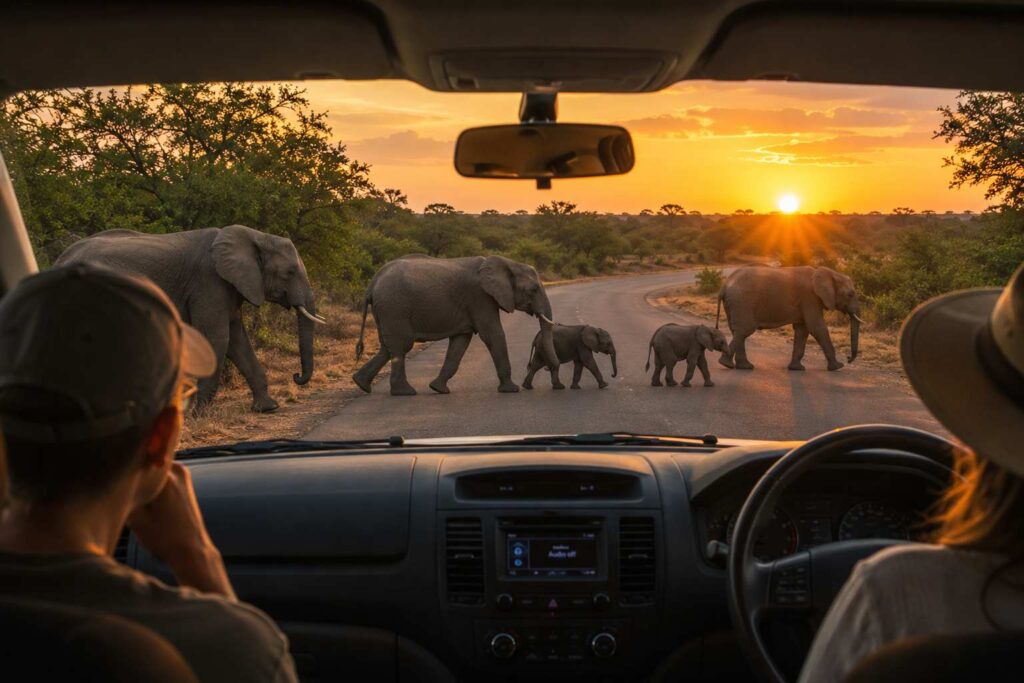
It’s common for animals to walk directly past your vehicle.
You may encounter:
- Elephants crossing the road.
- Lions resting on warm asphalt.
- Buffalo grazing nearby.
- Giraffes browsing overhead.
- Hyenas wandering along roadsides.
- Herds of zebra and antelope.
These encounters are normal and generally very safe when visitors remain calm and patient.
Never pressure animals by driving too close or attempting to encourage movement.
How to behave around elephants
Elephants deserve particular respect.
Although they are usually calm, they are also intelligent, powerful, and highly aware of their surroundings.
Signs that an elephant may feel uncomfortable include:
- Head held high.
- Ears spread wide.
- Trunk curled inward.
- Dust throwing.
- Mock charges.
If an elephant appears agitated:
- Stop at a safe distance.
- Give it space.
- Reverse slowly if necessary.
- Avoid blocking its path.
Most encounters end peacefully when visitors remain patient.
Lions, leopards, and predators
Predators are among the highlights of any Kruger safari.
Fortunately, lions, leopards, and cheetahs generally pay little attention to vehicles.
Enjoy sightings quietly without:
- Revving the engine.
- Honking.
- Calling animals.
- Playing sounds.
- Leaning out of windows.
Allow guides and experienced drivers to set the tone for respectful wildlife viewing.
Self-drive safety tips
Self-driving is one of Kruger’s greatest attractions and is considered very safe when common sense is used.
Some important recommendations include:
- Obey speed limits.
- Stay on designated roads.
- Keep enough fuel for the day’s route.
- Carry drinking water.
- Download offline maps.
- Check weather conditions before long drives.
Driving slowly not only improves safety but also dramatically increases your chances of spotting wildlife.
Road hazards beyond wildlife
Animals aren’t the only consideration.
Drivers should also be aware of:
- Narrow roads.
- Sharp bends.
- Occasional potholes.
- Sudden animal crossings.
- Slow-moving safari vehicles.
- Heavy rain during the summer season.
Avoid driving after dark, as public visitors are generally required to be inside camps before gate closing.
Why gate times are so important
Kruger’s entrance gates and rest camp gates operate according to strict opening and closing schedules that vary slightly throughout the year.
These times exist for two important reasons:
- Visitor safety.
- Wildlife conservation.
Driving after dark dramatically increases the risk of collisions with animals and makes emergency assistance more difficult.
Always plan your route carefully to ensure you arrive well before closing time.
Late arrivals may face penalties and should never expect gates to remain open beyond official hours.
Planning your driving distances
Kruger is much larger than many first-time visitors expect.
Although roads appear short on a map, wildlife sightings frequently slow travel.
A route that looks like a two-hour drive can easily become four or five hours once you stop to observe animals.
Allow generous travel times and avoid trying to cover too much ground in one day.
The journey itself is part of the safari.
Rest camps and picnic sites
Kruger’s rest camps provide safe environments where visitors can leave their vehicles.
Facilities often include:
- Restaurants
- Shops
- Accommodation
- Fuel stations
- Viewing areas
- Picnic facilities
Some picnic sites are unfenced.
Even in designated visitor areas, remain alert, supervise children carefully, and never approach wildlife that may enter nearby.
Monkeys and baboons are particularly skilled at stealing unattended food.
Protecting yourself from the sun and insects
South Africa’s climate can be surprisingly intense.
Bring:
- Sunscreen
- A wide-brimmed hat
- Sunglasses
- Plenty of drinking water
During the warmer months, mosquitoes are more active, particularly in the evenings.
Depending on your travel dates and itinerary, consult your healthcare provider about appropriate malaria prevention before traveling to Kruger.
Long sleeves and insect repellent can also help reduce bites.
What happens in an emergency?
Kruger’s ranger teams regularly patrol the park and respond to emergencies.
Rest camps have staff available to assist visitors, while emergency contact information is provided at entrance gates and visitor facilities.
Mobile phone coverage exists in many areas but may be limited in remote parts of the park.
Before departing each day:
- Tell someone your planned route.
- Keep your phone charged.
- Carry basic first-aid supplies.
- Know where your next rest camp is located.
Fortunately, serious visitor emergencies are rare.
Common mistakes first-time visitors make
Most avoidable problems result from simple errors rather than dangerous wildlife.
Common mistakes include:
- Leaving too late for camp.
- Driving too fast.
- Ignoring gate times.
- Feeding animals.
- Leaving food unattended.
- Standing through sunroofs.
- Exiting vehicles outside designated areas.
Following the rules protects both visitors and the animals that make Kruger so special.
Why Kruger remains one of Africa’s safest safari destinations
Despite being home to the Big Five and many other potentially dangerous species, Kruger has developed an excellent reputation for visitor safety.
Clear regulations, well-maintained infrastructure, experienced staff, and responsible tourism practices allow people to experience genuine wilderness while minimizing unnecessary risks.
When visitors respect wildlife and follow park rules, Kruger is an exceptionally safe destination for individuals, couples, families, and self-drive travelers alike.
Conclusion
A safari in Kruger National Park is both exciting and remarkably safe when approached with preparation and common sense. Respecting wildlife, remaining inside your vehicle, obeying speed limits, and planning around official gate times are the foundations of a successful visit.
Rather than limiting your experience, these simple rules allow you to enjoy close wildlife encounters with confidence while helping protect one of Africa’s greatest conservation areas. With the right mindset, you’ll spend less time worrying about safety and more time enjoying the unforgettable moments that make Kruger so special.
For more Kruger travel guides, self-drive advice, and safari planning tips, continue exploring the WhySafari blog.
FAQs
Yes. Self-driving is one of the park’s most popular ways to explore and is very safe when visitors follow park regulations and drive responsibly.
Only at designated areas such as rest camps, picnic sites, and approved viewpoints. Elsewhere, leaving your vehicle is prohibited for safety reasons.
Remain calm, keep a safe distance, and wait patiently. If the elephant appears uncomfortable or begins displaying warning behaviors, reverse slowly and give it more space.
Yes. Entrance and camp gate opening and closing times are strictly observed and vary seasonally. Plan your route carefully to avoid arriving late.
Absolutely. Thousands of families visit every year. Children should always be supervised closely, especially in unfenced picnic areas and around wildlife.
Stay inside your vehicle whenever possible and contact park authorities if you have mobile coverage. Rangers regularly patrol the park and can provide assistance.
Kruger lies within a malaria-risk area for much of the year. Consult your healthcare provider before traveling for advice on preventive medication and other protective measures.